



Concerns over World Cup security arise as violence erupts in Mexico following the death of a cartel leader
24/02/2026 18:40:03 十年老球迷
 0
0  0
0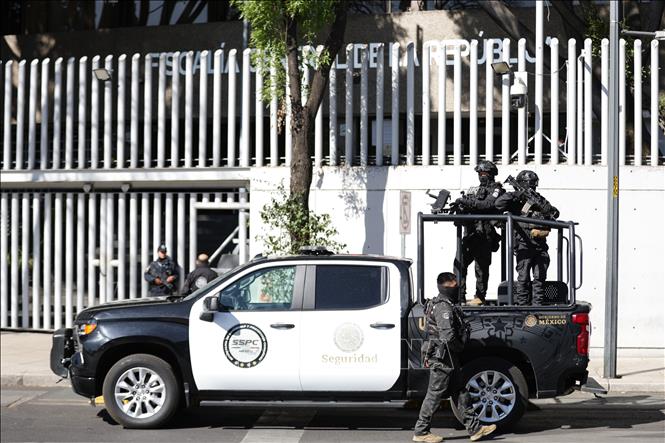
According to the UK’s The Guardian, the federal campaign to eliminate the leader of the Cártel de Jalisco Nueva Generación (CJNG) triggered a widespread wave of violence, including numerous blockades, vehicle burnings, and acts of sabotage across multiple cities.
Roads to the World Cup stadium blocked
There is only one main route leading to Estadio Akron — home stadium of Chivas Guadalajara and scheduled to host four group stage matches this World Cup. Previously, the biggest concern around the stadium was traffic congestion as the tournament approached. However, on Sunday (February 22), a different kind of threat emerged.
Less than 2 km from the stadium, near the go-kart track named after F1 driver Sergio “Checo” Pérez, a bus was set on fire, blocking the vital access road. Yet, this was not an isolated incident in Jalisco that morning.
In retaliation for the operation that killed their leader, CJNG members erected barricades throughout the area, from downtown Guadalajara to the coastal city of Puerto Vallarta. Buses and taxis were hijacked and set ablaze — a familiar tactic known as “narcobloqueos.” Numerous businesses, ranging from Costco supermarkets in Puerto Vallarta to small shops, became targets of vandalism and arson.
City authorities activated a red alert, urging residents to stay indoors and ordering bars and restaurants to close. Sports events were directly impacted: the “Clásico Nacional” women’s match between Chivas and Club América was postponed, and a Liga MX men’s game in Querétaro — over 300 km away — was also rescheduled despite no lockdowns reported locally. Reports indicate CJNG and allied groups blocked roads in at least eight states.
The shadow of the past and fears of recurrence
These recent developments have revived a long-standing question: how will Mexico ensure the safety of tens of thousands of visitors and residents when the World Cup kicks off?
The concern is well-founded. In August 2011, a shooting outside Estadio Corona of Santos Laguna caused players from both teams to panic and retreat to the locker rooms during a match against Monarcas Morelia. Fans ducked down in their seats, with many spilling onto the field seeking shelter. Although it was later confirmed the shooting occurred outside the stadium premises and no casualties happened inside, the chaotic scene dealt a severe blow to Liga MX’s efforts to build a family-friendly image.
In Sinaloa state, second-division club Dorados has been unable to play true home games since October 2024 due to conflicts between factions of the Sinaloa Cartel. The team was forced to temporarily relocate to Baja California, despite local baseball teams continuing their schedules normally. Previously, in 2019, an attempt to arrest Ovidio Guzmán López — son of cartel leader Joaquin “El Chapo” Guzmán — led to a violent cartel show of force with blockades and gunfire throughout Culiacán, an event dubbed the “Culicanazo.”
Because of such precedents, many have questioned whether the government would avoid large-scale operations ahead of the World Cup to prevent escalating violence. National security and organized crime journalist Óscar Balderas revealed that a high-level source disclosed Mexico had asked the US not to carry out any arrests or killings of “El Mencho” in 2026, fearing a CJNG-style “Culicanazo” while the world watches would be a national image disaster.
However, the recent operation shows that both governments opted for a different approach, or that pressure from Washington intensified before the tournament.
Government and FIFA reassurance
Mexico’s President Claudia Sheinbaum faces the challenge of balancing domestic interests with pressure from the US administration, especially as President Donald Trump begins his second term. Meanwhile, FIFA, under President Gianni Infantino, must closely coordinate with host countries to guarantee security.
Jurgen Mainka, FIFA’s executive director in Mexico, affirmed at the end of 2025 that FIFA’s office in Mexico had worked for three years with the federal and local governments on security issues, expressing strong confidence that the planned measures would provide the necessary safe environment for fans, teams, and referees.
The Jalisco state government also announced plans to install thousands of additional security cameras, procure equipment for law enforcement, and deploy technology to prevent drones from entering restricted areas.
Nevertheless, all these commitments were made before images of burning vehicles and blocked streets flooded social media last weekend, shocking many worldwide, including fans from South Korea, Colombia, Uruguay, and Spain who are planning to travel to Jalisco to watch their teams play.
With these simmering issues now erupting violently, Mexican authorities face intense pressure to prove they can control the situation and protect residents and visitors. The challenge is not only to ensure the World Cup proceeds smoothly but also to avoid repeating moments like August 2011, when football — a national pride — was overshadowed by the ongoing battle against organized crime.


Wonderfulshortvideo

mbappe news mbappe edit mbappe new shoe boot deal mbappe nike


julian alvarez barcelona news
James Trafford’s big moment in the U21 EURO final 🤯

RODRI BARCELONA transfer barcelona news today rodri to barcelona transfer here we go
gianni infantino and trump drama news
jorge messi death messi news today football news today
jose mourinho netflix documentary pep guardiola mourinho beef mourinho edit
 Links
Links
 Contact