



The integration of Chinese and Korean football in Zhidan: Professional matters ultimately rely on professionals
18/08/2026 13:00:14 无名者
 0
0  0
0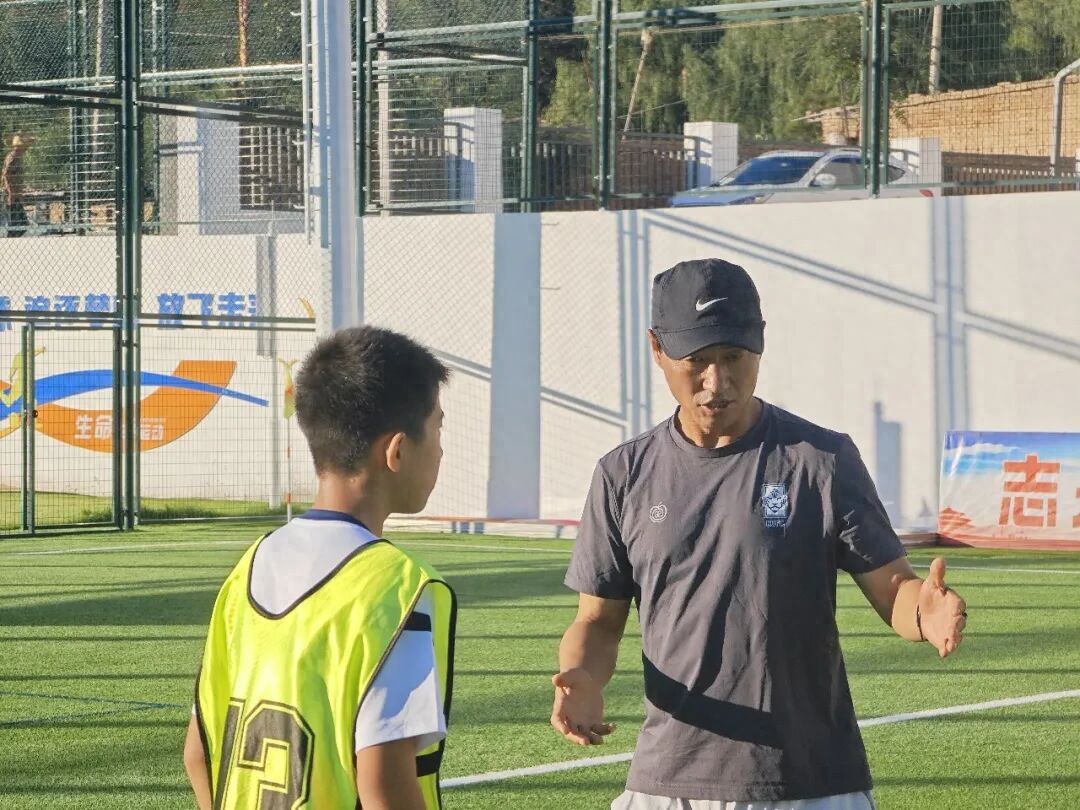
Zuo Rui reports from Zhidan During the "Century-Old Famous Schools Cup" primary school division, children line up every day at the Yan'an Zhidan Youth Training Center to take photos with "Grandpa Li Zhangzhu." The honorary principal of Zhidan County Football Sports School understands well that it is not him, but his two Korean juniors in their 70s—Xu Huamao and Li Zhongyun—who can continuously and directly influence the children's passion for football, their competitive training standards, and future development.

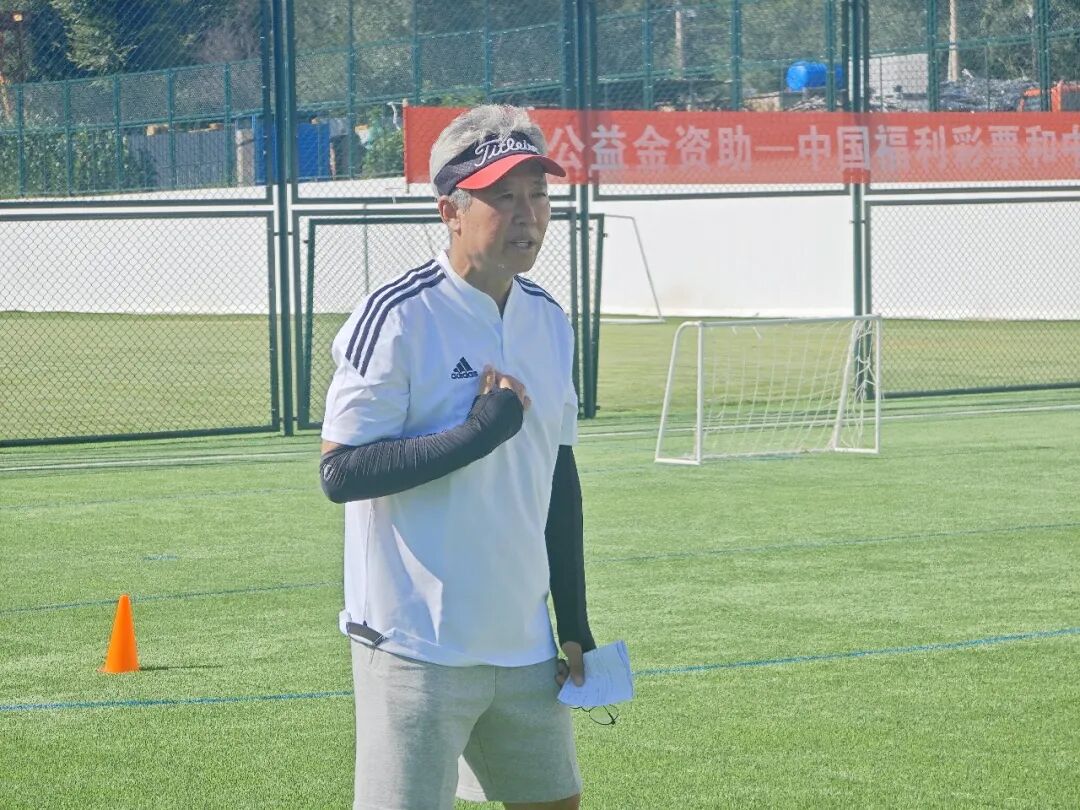
August 14 marked the 20th day since the new youth training director Xu Huamao and head coach Li Zhongyun joined the Zhidan Youth Training Center, and both considered it a "very important and memorable day"—because they conducted their first training session in China. To facilitate the foreign coaches' work, Zhidan brought in two Korean translators and assigned four Chinese assistant coaches.
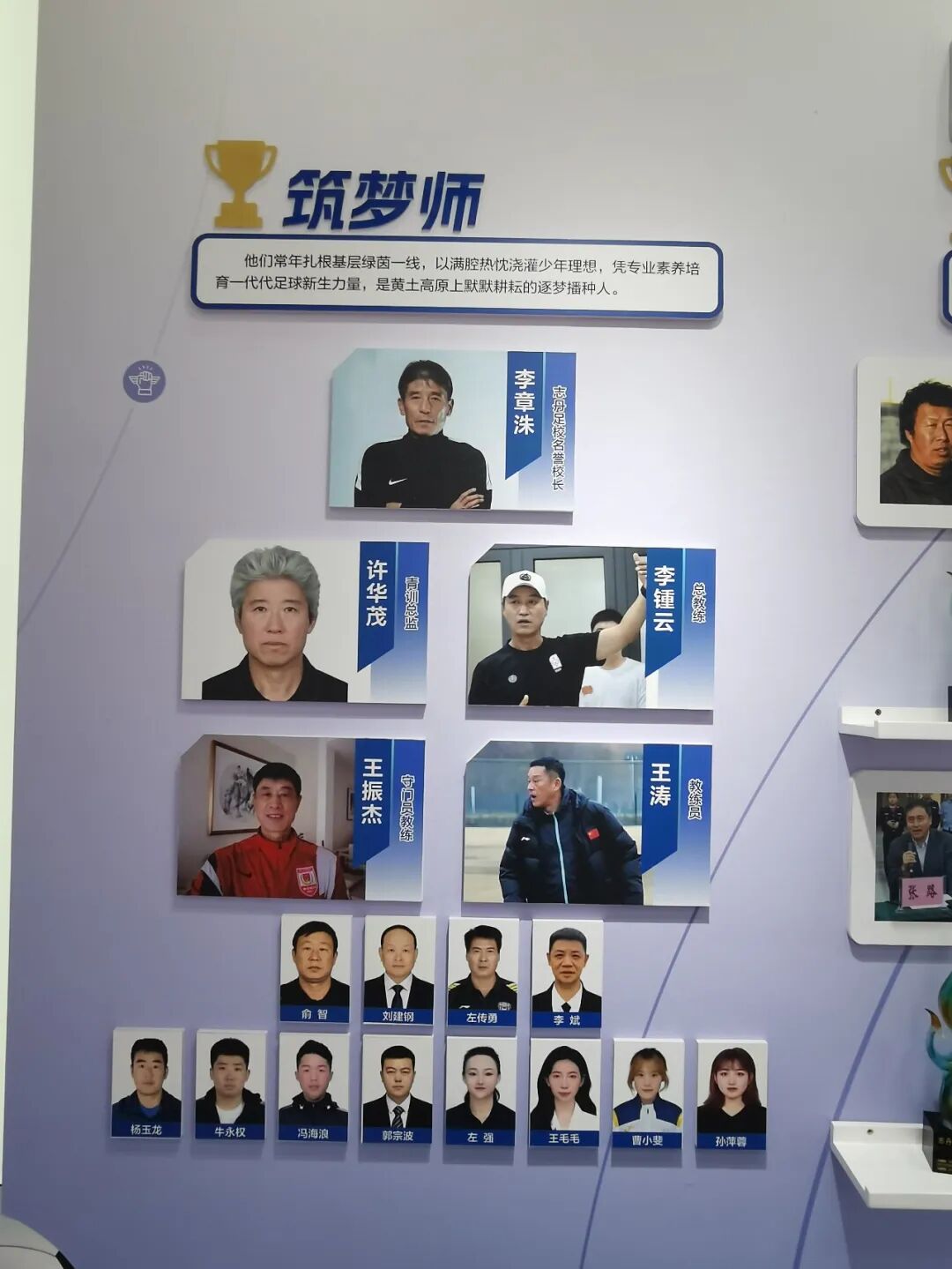
Xu and Li are respectively responsible for forming and training the Zhidan County teams for the 2015-16 and 2017-18 age groups, with the goal of representing Yan'an City in the 2030 Shaanxi Provincial Games. The selection pool during the summer break was limited; after repeated observations of training camps at two schools, they selected 13 players from 40 candidates. "After school starts, we will visit all schools in Zhidan County and Yan'an City," they said.
The first training session was not for the initially selected players but for teams participating in the "Century-Old Famous Schools Cup." Xu Huamao hoped to quickly integrate with the translators and assistants before completing team formation, preparing for four years of overseas coaching. During school training camps and this tournament, they noticed that primary-level training generally emphasizes offense over defense, so this 90-minute session focused on defense.
The training consisted of four segments: one-on-one defense, enhanced defense, teamwork defense, and concluded with triangular offense. Each segment included demonstration and explanation, followed by practice, re-explanation, and more practice. "Modern football requires players to have defensive capabilities regardless of position, and world-class players are good at observing, scanning constantly, and keeping track of teammates' positions and opponents' movements," Xu told the players.
The two Korean coaches also observed the players' reactions and expressions, offering timely encouragement and patient corrections, signaling to speed up or slow down when necessary, and monitoring water breaks and recovery time. The carefully designed training gave the children a new experience. Du Yichen from Zhengzhou said he felt honored to train with a coach who is serious "to this degree," while Lu Fangyu from Yan'an realized for the first time "the key points of defense and the importance of observation."
The Korean coaches were also observed by their Chinese counterparts. Yang Gang, the head coach of Tangshan Haigang No.1 Primary School, who is over 60, believes that a coach's true skill is shown not by "what to train," but by making children understand "why" during training and "what" the effect is in game scenarios. After watching the session, he concluded: "Both Korean coaches are excellent."
After the impressive training session, Xu Huamao expressed his joy in training with Chinese children: "Thank you all for your effort. If you persist daily, repeat training, and think seriously, skilled techniques will become your own capital." Li Zhongyun said, "Training is for better competition, so take it seriously. The key to success or failure is habits. Good habits will make you a professional; bad habits will ruin a player."

The first collaboration between the two Korean coaches came about not only through the mediation of Soccer News between Chinese and Korean football circles and the respect and trust of the Zhidan County Football Association for Korean football legend Li Zhangzhu, but also through a unique coincidence—in 1992, they met at the Seoul E-Land Puma Club, participated in the Korean league together, and went their separate ways two years later.
After their brief overlapping playing careers ended, Xu Huamao, one year older, and his junior Li Zhongyun began different coaching paths. Both received higher education, hold AFC A-level coaching licenses and Korean Level 2 Professional Sports Instructor certificates, but what truly earned them Li Zhangzhu's appreciation and the Zhidan County contract were distinctive highlights in their resumes.
After retiring, Xu Huamao returned to his alma mater, Chung-Ang University Affiliated High School, as a football coach. Starting as an assistant coach for the high school division, he then became the head coach for the middle school division, a position he held for 25 years, demonstrating his dedication and focus. During this time, Xu nurtured many football talents and was personally selected five times as the Excellent Coach of the Korean National Middle School Football Conference and twice as the Best Coach of Seoul Middle School Football Competitions.
"When I first returned to my alma mater, my middle school teachers, homeroom teacher, head coach, and principal were all still there, and they really valued and embraced me," Xu said. He enjoyed working in such an environment, led his team to outstanding results in middle school leagues, and his alma mater fully recognized him. "I'm very willing to accept the challenge of continuing my expertise overseas," he added.
Li Zhangzhu's selection of Xu Huamao's working partner surprised and delighted him. Before coming to China, Xu and Li lived in Seoul and Namyangju respectively; they would meet at youth tournaments but never imagined they would one day work together in China. "It's really a stroke of luck, since we came from the same school and were teammates," Xu said with a smile. "If we had become opponents in Chinese youth competitions, it might have been a painful thing."
Li Zhongyun's coaching resume is more extensive, including youth clubs, professional club youth teams, university teams, and the national university team. For the new employer Zhidan Youth Training Center, the most valuable experience of this foreign coach is his role as a coach instructor for the Korea Football Association (KFA) and his participation in the "KFA Golden Age" program.
It is understood that the Golden Age program is a KFA youth training project launched in 2014, with the football philosophy of "being faithful to basic creativity and challenge." The KFA believes that only by combining the joy of football, age-appropriate training, and personal development can world-class players be cultivated. Based on the growth cycle of Korean youth players, the project defines ages 6–11 as the pre-Golden Age, 12–15 as the Golden Age, and 16–19 as the post-Golden Age, establishing a four-tier pyramid youth training system nationwide: 21 regional centers, 5 wide-area centers, 1 joint wide-area center, and 1 KFA Elite Center. Li Zhongyun served as the head coach of the joint wide-area center and assistant coach of the KFA Elite Center.
After the old teammates formed a new partnership, they unified their coaching philosophy. During their first visit to Zhidan in early June, both were moved by the local passion for football, strong government support, the simple folk customs of the Zhidan people, and their serious attitude. Xu Huamao said, "Since we are here, we need to find a new sense of belonging in our career, put our hearts into Zhidan, and give it our all."

Seeing the top-notch facilities at the Zhidan Youth Training Center, the children running hard, and their eager eyes for improvement, the two foreign coaches believed that even starting from scratch here, they could achieve something. They would "fully support the children's goal of becoming professional players." In their view, no amount of talent can surpass hard training.
Through introductions from the local football association and their interpreters, Xu and Li learned that Zhidan is the only county-level administrative region among China's eight western youth training pilot areas, standing alongside 18 key cities as a strategic focus of Chinese football. Among China's 2,847 county-level administrative regions, Zhidan County has become a unique presence through football. "We are beginning to realize that it is a great honor to work for Zhidan football," Xu said. "From a single county, you can see how much potential Chinese football has."
The client's requirements were: the U15 and U13 boys' teams must finish in the top three at the next Provincial Games; send more talent to the provincial team and the Xi'an regional youth training center; and allow Chinese coaches to participate in daily training, making it completely open to Chinese counterparts. The foreign coaches fully accepted these terms. Although they are still unfamiliar with the youth training levels across Shaanxi, talent development is their specialty and wish. "If we cultivate talents and higher-level platforms want them, we will be very happy to send them out," they said.
After arriving in Zhidan, they realized that what the local authorities truly wanted was not just hiring two foreign coaches. Regardless of how long they stay, "what we leave behind after we leave is the most important thing."
Li Zhongyun said that the Golden Age program was developed based on in-depth study of youth training systems in football powerhouses like Germany, France, and the Netherlands, and tailored to Korean conditions. Its continuous implementation and updates have positively changed the past situation where Korean football relied entirely on teamwork and lacked individual ability. "What we want to do is not to copy the practices of Korea or any other country, but through observation and research, to develop a new football growth system that absorbs global advanced experience, suits China's national conditions, and fits Zhidan's children," Li said. Xu added, "Although our understanding of the Chinese youth training system is not yet deep enough, China is so vast. We will do our best within our capabilities."
Li Zhongyun had two concerns: Could a Korean working far from home quickly adapt to China and make a difference in an unheard-of county? Was he qualified and capable of being the head coach of the Zhidan Youth Training Center? After doing his homework and with encouragement from Li Zhangzhu and Xu Huamao, he decided to challenge himself in China with all his knowledge.
"We want to establish an independent brand for Zhidan youth training. It would be impossible without the help of players, parents, the football association, and all sectors of society," Li Zhongyun said. He hopes that in the future, when people mention Zhidan, they will say that the football there has its own system and tactics. "This brand is related to Korean coaches, but it belongs to Zhidan football itself."


Wonderfulshortvideo

mbappe news mbappe edit mbappe new shoe boot deal mbappe nike


julian alvarez barcelona news

James Trafford’s big moment in the U21 EURO final 🤯
RODRI BARCELONA transfer barcelona news today rodri to barcelona transfer here we go
gianni infantino and trump drama news
jorge messi death messi news today football news today
jose mourinho netflix documentary pep guardiola mourinho beef mourinho edit
 Links
Links
 Contact