



Japan is set to have a record number of players in the Premier League, while South Korea faces a blank

17/08/2026 22:20:22 客服
 0
0  0
0Japanese football is about to achieve an unprecedented milestone in the Premier League, while South Korea faces its first void in over two decades.
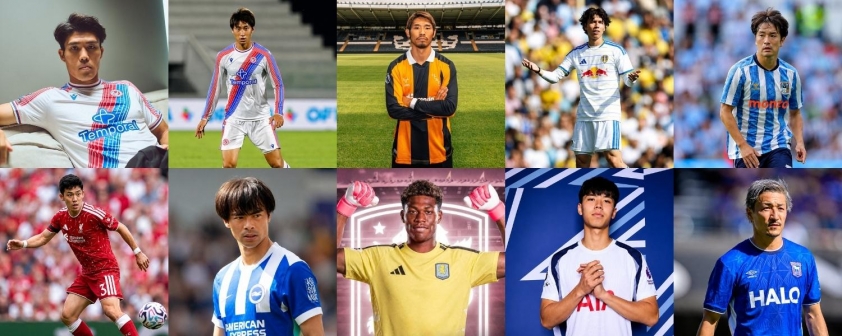
A notable shift in Asian football is taking place right in the Premier League. If Zion Suzuki completes his move to Aston Villa as expected, Japan will enter the 2026/27 season with 10 players featuring in England's top flight, while South Korea faces its first season in 21 years without any regular representative.
According to The Times, Aston Villa has reached an agreement worth £25.6 million, plus £4.28 million in add-ons, with Parma for Suzuki. The 23-year-old goalkeeper has also been offered a five-year contract. If no last-minute U-turn occurs, Suzuki will become the tenth Japanese piece in the Premier League.

The remaining nine names are Kaoru Mitoma (Brighton), Wataru Endo (Liverpool), Daichi Kamada and Takehiro Tomiyasu (Crystal Palace), Ao Tanaka (Leeds), Kota Takai (Tottenham), Tatsuhiro Sakamoto (Coventry), Daizen Maeda (Ipswich) and Hidemasa Morita (Hull City). From just four players last season, Japan's presence has skyrocketed in a single summer.
The milestone is even more remarkable when looking back at the journey that began with Junichi Inamoto. Arsenal brought the Japanese midfielder to England in July 2001, though it wasn't until he played for Fulham in 2002 that he became the first Japanese player to feature in the Premier League.
On the flip side, South Korea is witnessing a 21-year era at risk of coming to an end. Park Ji-sung joined Manchester United in 2005, starting a continuous presence of South Korean players in the league. After Park came Lee Young-pyo, Ki Sung-yueng, Lee Chung-yong, and notably Son Heung-min. But Son has left Tottenham for Los Angeles, while Wolves' Hwang Hee-chan was relegated. Yang Min-hyeok, Kim Ji-soo, and Park Seung-soo still belong to Premier League clubs but all face the prospect of being loaned out again.
That gap has even prompted Park Ji-sung to speak out. According to the Korea JoongAng Daily, the former Man Utd midfielder said: "There are over 100 Japanese players in Europe. More South Korean players need to keep taking on challenges."
Japan is not just sending more players to Europe; they are building a systematic pathway through Belgium, the Netherlands, Germany, and Portugal before moving on to the biggest leagues. In a season where the Premier League could witness a symbolic scoreline of 10-0 between Japan and South Korea, the story is no longer simply about the number of players.


Wonderfulshortvideo

mbappe news mbappe edit mbappe new shoe boot deal mbappe nike



julian alvarez barcelona news
James Trafford’s big moment in the U21 EURO final 🤯

RODRI BARCELONA transfer barcelona news today rodri to barcelona transfer here we go
gianni infantino and trump drama news

jorge messi death messi news today football news today

jose mourinho netflix documentary pep guardiola mourinho beef mourinho edit
 Links
Links
 Contact