



Reflections on the 2026 FIFA World Cup in the United States, Canada, and Mexico: Exploring the Evolution and Development Trends of Football Tactics and Techniques

12/08/2026 15:35:12 克里斯123
 0
0  1
1Editor's Note
The 2026 FIFA World Cup, a "Super World Cup" expanded to 48 teams, not only reshaped the tournament's structure but also sparked a systemic revolution in tactics and techniques. In this issue, we present a comprehensive 10,000-word analysis by Zeng Min—a seasoned football professional with over two decades of administrative experience within the Chinese Football Association, deeply versed in sports science and modern training systems. Offering a dual perspective as an internal observer and a systems engineer, he delivers a tactical report of exceptional value.
The article reviews this "efficiency-first" World Cup from seven dimensions: rule evolution, formation revolutions, data metrics (PAC/PPDA), spatiotemporal dynamics, systematic team building, and more. The author not only deconstructs the underlying logic behind Spain's "Tiki-Taka 2.0" triumph but also uses Messi's "systemic predicament" and Mbappé's "vertical value" to argue that modern football has fully transitioned into "systemic confrontation." This is not just a review; it is a "manual" for the modern development of Chinese football.
Abstract
The 2026 FIFA World Cup, the first "Super World Cup" with 48 teams under FIFA, fundamentally shattered the traditional tournament structure and tactical boundaries of the World Cup. The expansion format reshaped spatiotemporal dynamics, iterated offensive and defensive philosophies across teams, and popularized data-driven tactics and systematic football, collectively outlining a new development trajectory for contemporary world football.
This article conducts an in-depth analysis of the new trends in football revealed by the World Cup from seven perspectives: tournament structure and preparation logic, rule evolution and tactical variables, tactical and technical innovations, spatiotemporal dynamics, data-driven tactical codes, system and player evolution, and tactical philosophy iteration. The study finds that:Modern football has completed a paradigm shift from "possession at all costs" to "quick forward progression," a systemic upgrade from "individual heroics" to "system engineering," and a decision-making revolution from "experience-driven" to "data-driven." Efficiency outweighs possession, depth determines the ceiling, space is the ultimate battlefield, and the system surpasses talent—these have become the core principles of contemporary football development.


The 2026 FIFA World Cup, the first "Super World Cup" expanded to 48 teams in FIFA history, saw a comprehensive upgrade in tournament scale, schedule, and competitive landscape. The entire tournament featured 104 matches, with a total of 308 goals scored, averaging 2.96 goals per game—significantly higher than the average of 2.5 goals per game in the group stages of the previous two World Cups. This qualitative change in scale not only brought a longer schedule and more intense competition but also fundamentally reshaped teams' tactical choices, squad configurations, and physical management logic.
The expanded format required champions to complete 8 matches in 39 days, spanning multiple time zones and climate zones, with the high temperatures and humidity of the North American summer further amplifying the physical load. This structural load fundamentally rewrote the preparation logic: squad depth and planned rotation evolved from backup options to core strategic elements. The expanded knockout stage, consisting of the top two from each of the 12 groups and the eight best third-placed teams, compressed the margin for error—teams could no longer conserve energy after securing qualification; every match demanded full effort. Training organization also shifted from traditional "between-match recovery" to systematic load management: low-intensity micro-cycles between match days, allowing starters to maintain form through recovery training and substitutes to stay match-ready through high-intensity simulation. Tactical preparation continuity and adaptability replaced single-match explosiveness as the new competitive advantage.
This World Cup abandoned pure possession-based aesthetics and individual heroism, embracing efficiency, spatial competition, systemic superiority, and data empowerment as core features, making it a benchmark for observing modern football trends. From Spain's triumph with "Tiki-Taka 2.0" and structured pressing, to dark horses like Egypt and Morocco challenging traditional powerhouses with precise counterattacks, to Argentina's systemic collapse due to a one-dimensional system, the diverse performances of teams collectively painted a new competitive landscape. In the final, Spain "controlled" the match with 65% possession and 20 shots, while Argentina managed only 2 shots, none on target. Argentina's expected goals (xG) for the entire match was as low as 0.09—this was not accidental but a necessary consequence of their entire attacking system being completely suppressed by Spain.
This article aims to systematically analyze the tactical and technical evolution of the 2026 World Cup, revealing the deep transition logic of modern football from "competing for stars" to "competing for systems," and to forecast future development trends in the sport.
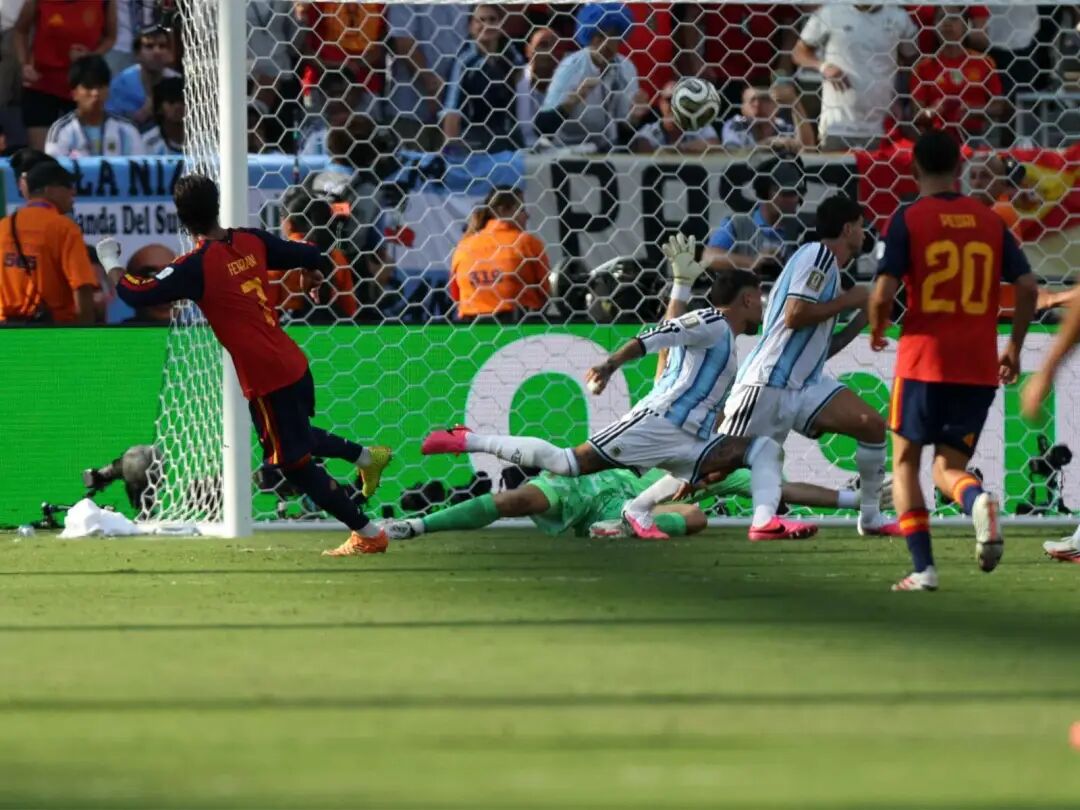

The 2026 FIFA World Cup, a milestone tournament in the expansion of football, confirmed the core development laws of modern football through extensive real-world cases and precise data:
Efficiency Over Possession:Metrics like PPDA and PAC demonstrate that high pressing and rapid transitions have become standard for top teams, while ineffective possession is being phased out worldwide.
Depth Determines the Ceiling:Squad depth and tactical flexibility are no longer "bonuses" but "necessities." Teams unable to maintain competitive form over a long schedule, even with top stars, cannot go the distance.
Space is the Ultimate Battlefield:The core of tactical competition lies in the creation and closure of space, especially in the wide areas.
System Surpasses Talent:Successful teams (like Spain) rely on replicable, engineerable tactical systems, not dependence on individual stars.
In this tournament, Spain's systemic advantage with Tiki-Taka 2.0 and structured pressing led them to the title, showcasing the precision of modern tactical football; France's flexible attacking and defensive system and extreme counter-attacking efficiency kept them among the elite, highlighting the importance of tactical adaptability; dark horses like Egypt and Morocco challenged traditional powerhouses with precise counterattacks; England paid the price for tactical rigidity, stopping at the semi-finals due to conservative tactics and spatial errors; Argentina suffered a systemic collapse in the final due to over-reliance on a single star and low system fault tolerance.
The performances of various teams collectively outline a new football landscape:Football competition has evolved from a one-on-one duel of individual star talent to a comprehensive system engineering involving tactical systems, squad depth, spatiotemporal control, data-driven decisions, and physical management.
This Super World Cup was not only a grand celebration of football but also a bellwether for the iteration and upgrade of world football. It proves that victory in modern football is never the triumph of a single talent but a comprehensive victory of scientific tactics, team collaboration, and precise decision-making, charting a clear direction for the future of the sport.

This World Cup served as a concentrated testing ground for rule amendments by the International Football Association Board (IFAB), whose tactical impact was underestimated by many observers. The rule package established at the 140th IFAB Annual General Meeting in February 2026 and pre-tournament clarifications directly reshaped the tactical designs of many teams.
(a) Anti-Delay Rule Package and Net Playing Time
The new rule stipulates that if a goalkeeper holds the ball for more than 8 seconds (with the referee counting down the last 5 seconds using a visible hand signal), the opposing team is awarded a corner kick, replacing the previous indirect free kick. Throw-ins and goal kicks are also subject to a 5-second visible countdown, with violations resulting in the opposing team being awarded a throw-in or corner kick, respectively. The goal of this rule package is to increase net playing time, with a dual tactical impact: on one hand, it curbs the incentive to waste time, forcing goalkeepers to make quicker decisions and backlines to play out faster; on the other hand, it objectively increases the risk premium of errors in buildup play, effectively providing a rule-based advantage for high-pressing tactics.
(b) Expanded VAR Authority
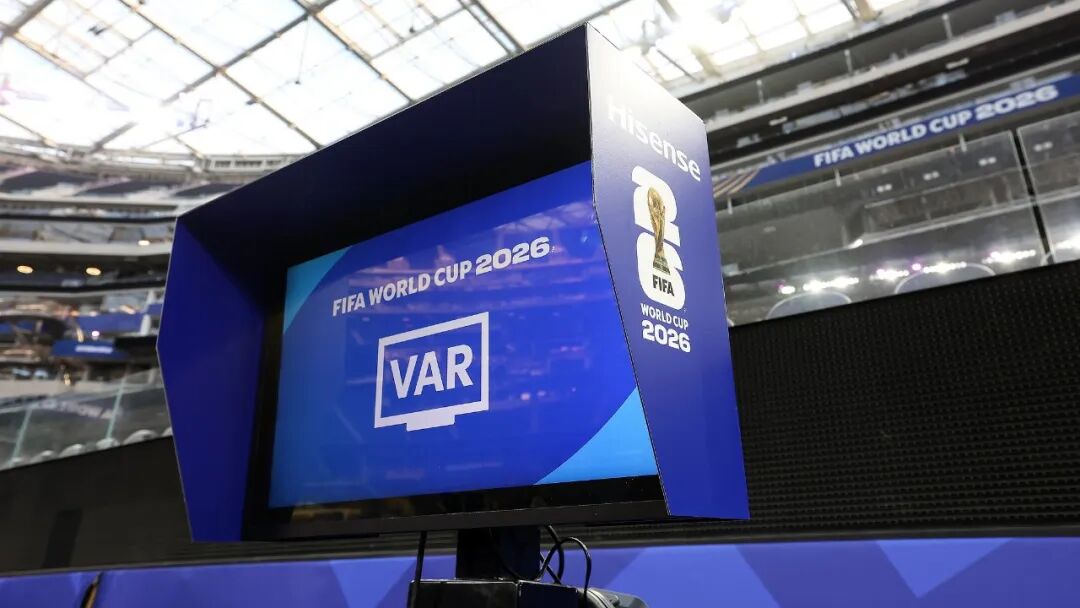
VAR gained four new categories of authority at this World Cup: correcting obvious errors in corner kick awards without delaying match restart; correcting red cards resulting from a clear error in issuing a second yellow card; correcting errors in the identity of the player penalized; and—most tactically significant—reviewing obvious fouls by the attacking team before a corner kick or free kick is taken; if such a foul directly affects a goal, penalty, or disciplinary sanction, the referee can review it and order the set piece to be retaken.
(c) Behavioral and Procedural Rules
Substituted players must leave the field within 10 seconds, or the substitute's entry is delayed; players receiving treatment on the field must leave for at least 1 minute; covering the mouth while talking during confrontations results in a direct red card; protesting a decision by refusing to play results in a direct red card and may also lead to a forfeit. The common aim of these rules is to compress non-playing time—their tactical consequence is that the value of physical reserves and squad depth is further amplified, while the benefits of "clever" game management are completely eliminated.
(d) Mandatory Cooling Breaks
For the first time, FIFA mandated approximately 3-minute cooling breaks around the 22nd minute of each half in all 104 matches, allowing coaching staff to use electronic devices during the break. Coaches quickly transformed these into tactical "quarter-breaks": managers like Koeman and Deschamps prepared specific tactical phases around the break; Pochettino used a laptop to show instant video clips to adjust defensive positioning in warm-up matches; the Australian coaching staff even studied methods from Australian Rules Football (AFL) to maintain focus during the break, to manage the 3-4 minute period of attention and intensity fluctuation after the break. Data showed a noticeable increase in shot attempts after the break—making tactical surprises in the first half less sustainable.
Overall Conclusion on Rule Evolution: The tactical and technical forms of this World Cup were not purely a product of coaching genius but an adaptive equilibrium constrained by the rule environment, climatic conditions, and tournament schedule. Any serious tactical analysis must incorporate the rule variable into its explanatory framework.

This World Cup completely abandoned the traditional obsession with "possession at all costs." All teams generally adopted pragmatic football, centered on "increasing speed and efficiency, balancing attack and defense, and flexible adaptation," completing a comprehensive overhaul of formation systems, attacking and defensive strategies, and tactical thinking. Different levels of teams formed differentiated, targeted tactical approaches.
(a) Tactical Formations: Revival of Classic Formations and Dynamic Adaptability
Fixed formations are no longer a team's tactical label; the ability to flexibly switch formations based on opponent strength, match situation, and physical state has become a core quality for winning teams.
According to official statistics from the group stage, the formations used by teams in this World Cup were highly diverse, with 9 different mainstream formations adopted. Although 4-4-2 was the most popular (used by 12 teams), its win rate was not outstanding. In contrast, 4-2-3-1 and 4-1-2-3, two attack-oriented formations, won the most matches, demonstrating superior attacking efficiency and midfield control. This data reveals a deep logic of formation selection in modern football: popularity does not equal efficiency; formation effectiveness depends on its fit with the team's personnel, tactical philosophy, and opponent characteristics.
In the knockout stage, top teams formed clear formation preferences based on their core resources and tactical traditions:
France, England: Mostly used 4-2-3-1, balanced in attack and defense, facilitating connections between core stars. The double pivot provided defensive cover for wide attacks, while the front four (wingers + attacking midfielder + striker) created multiple attacking points, ensuring both central penetration and wide threat.
Spain: Based on 4-3-3 or 4-2-3-1, controlling the game rhythm with extreme possession. Their formation's fluidity far exceeded static labels—in possession, full-backs tucked in to form a 3-2-5; in defense, wingers dropped deep to form a 4-4-2. The same players presented different structures at different moments, triggered by ball position, scoreline, and match time.
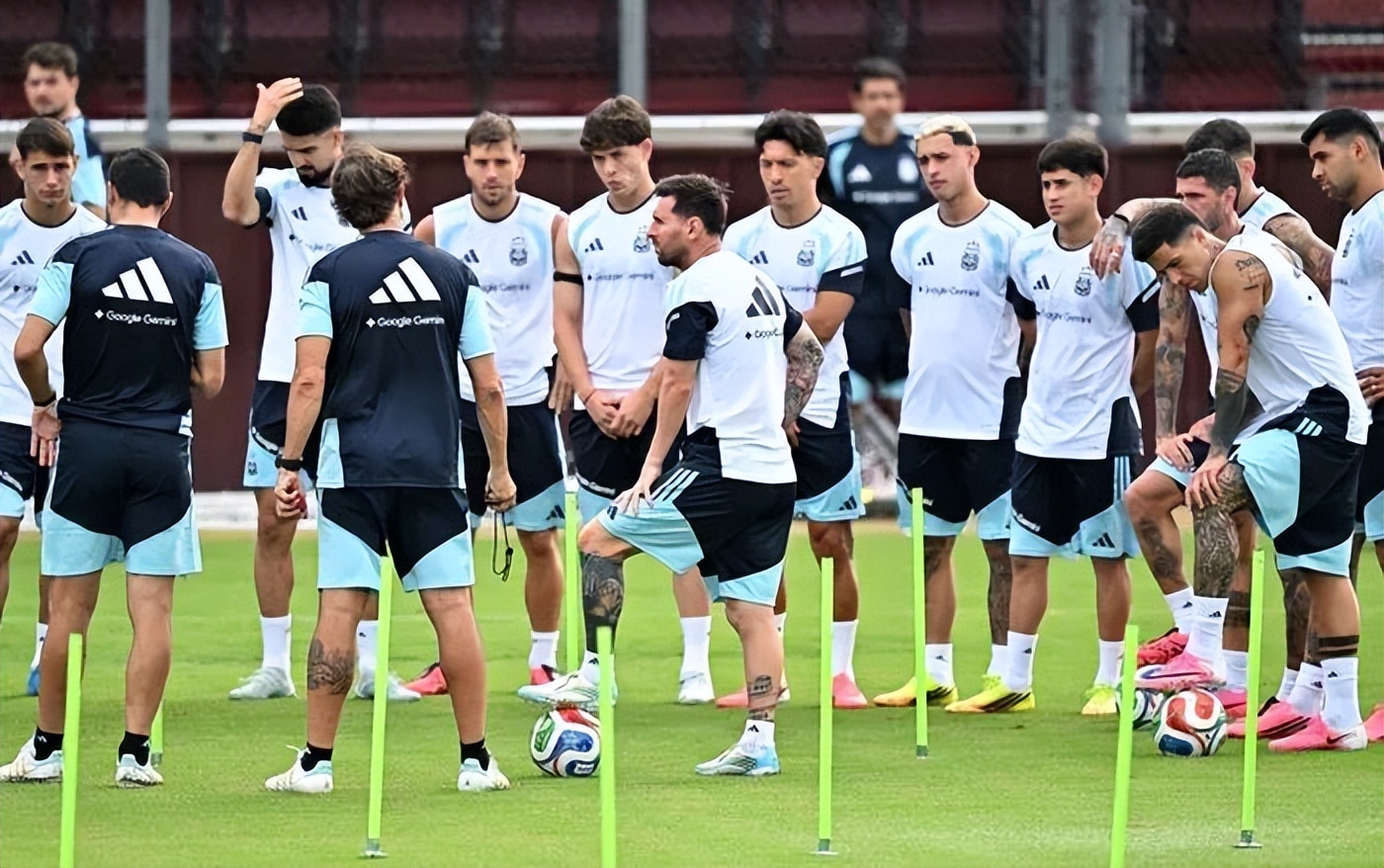
Argentina: Primarily played 4-3-3, but in practice (especially when chasing the game), the formation flexibly shifted to 4-4-2 or 4-1-3-2. Messi's role as a low-energy free organizer required the formation to create central space for him in possession and quickly drop into a 4-4-2 to compress midfield space in defense.
United States: Used 3-4-3 in the knockout stage, packing the midfield. The three-center-back formation released the vertical attacking space of the wing-backs, and the four-man midfield created numerical superiority to cope with high pressing from strong teams, reflecting a tactical intent of mid-to-low block defense and rapid vertical transitions.
1. Strong Revival of the 4-4-2 Formation
The classic 4-4-2 formation made a strong comeback at this World Cup, adopted by many mainstream teams including Brazil. This formation ensures both wide protection and midfield balance, adapting to the high-intensity transition pace of the game. Its revival is not a simple retro trend but a functional return in the modern football context—increasing penalty area threat through a two-striker setup and strengthening wide protection through a flat midfield, forming a balanced tactical skeleton.
2. Low Block Defensive Formations for Underdogs
Meanwhile, low-block defensive formations like 5-4-1 and 5-3-2 were widely used by underdogs to compress the opponent's attacking space and limit penetration by strong teams. Underdogs showed the world how to "actively surrender space" to gain match initiative. For example, in the match against Portugal, DR Congo voluntarily ceded possession, using a compact 5-4-1 to compress their defensive line within a 12-15 yard deep zone in front of the penalty area. This "structural depth deprivation" rendered Portugal's 75% possession into harmless, ineffective ball circulation.
3. Dynamic Formation Switching: Decisive Adjustments
Today, success is no longer about sticking to a fixed formation but about the ability to flexibly switch tactics based on opponent characteristics and match situations. The concept of a fixed formation further faded in 2026. Elite teams commonly implemented "one formation for defense, another for attack": Argentina dropped into a 4-4-2 in defense and pushed into a 3-2-5 in attack; Spain's full-backs tucked in to form a 3-2-5 in possession; in defense, France's Olise pushed up to form the first pressing line with Mbappé. Senegal provided a more refined example: their defensive system flexibly switched between a 4-2-4 high press and a 4-3-3 defensive trap, pressing opponents towards the touchline before executing a double-team.
The core function of formation switching is to optimize both ends: in possession, an extra player enters the attacking area, stabilizing buildup and bolstering the defense; in defense, dropping back ensures sufficient numbers. Taking Spain's 3-2-5 as an example, in attacking buildup, they formed a "three-center-back base + double pivot hub + five-man attacking line" box structure, ensuring half-spaces (the vertical channels between the center and wings) were always covered, while also guaranteeing enough players centrally to press immediately upon losing possession. The risk of positional ambiguity from dynamic switching is hedged by player versatility—central midfielders must be able to fill in as center-backs, wingers must be able to tuck in as organizers. Traditional overlapping full-backs struggled in the knockout stages because the margin for error in transition defense is near zero.
Formations have evolved from static labels to dynamic switching systems—the same players present different structures at different moments, triggered by ball position, scoreline, and time. The coaching focus is no longer "how many formations you know" but whether the trigger signals for switching can be translated into well-drilled training content. The implication for talent selection is "specialization plus adaptability"—players must first be top-level in their core position, then develop a secondary role. Positional versatility in the squad is the true meaning of depth.
Case Study: Argentina's 4-4-2 Struggles and Comeback Switching
In the Round of 16 against Egypt, Argentina used a 4-4-2 formation with Messi and Álvarez as the two strikers. However, lacking natural wingers, attacking width relied entirely on full-back overlaps. Facing Egypt's compact central defense, they could not penetrate. Trailing 0-2, coach Scaloni gambled, pushing midfielder Romero into attack, switching to a "three-striker plus two-center-forward" tactic, and moving Messi back to his familiar right flank. This switch immediately revitalized Argentina's attack, scoring three goals in the final 13 minutes for a dramatic comeback.
Case Study: England's "Six-Defender" Collapse
In the semi-final against Argentina, England took the lead in the 55th minute. Coach Tuchel substituted goalscorer Gordon for defender Konsa in the 72nd minute, switching from a back four to a back five; then substituted midfielder Rice for defender Burn in the 82nd minute, forming a rare "six-defender" defensive block. After taking the lead, England's possession plummeted to just 12%, actively shrinking their formation and ceding both possession and space to the opponent. Having successfully contained Messi in the first half, they lost momentum and the match after conceding control, eventually losing 2-1 to Argentina's sustained pressure.
Case Study: France's Dynamic Formation Adaptation
France was a typical example of dynamic formation adaptation at this tournament. They primarily used a stable 4-2-3-1, with a double pivot forming a midfield shield, balancing defensive stability and wide counter-attacking efficiency. In the crucial quarter-final against Morocco, Deschamps stuck with the established 4-2-3-1 system, making targeted adjustments to wide positioning to repeatedly attack Morocco's right defensive weakness, exhausting key defender Achraf's physical reserves, and cutting off the opponent's counter-attack origin, advancing 2-0. In the third-place match against England, trailing 4-0 at half-time, Deschamps decisively substituted four players, switching from a 4-3-3 to a 4-2-3-1, strengthening midfield interception and releasing wide attacking space, revitalizing Mbappé's role as a target man. They scored three goals in the second half for a stunning comeback, fully demonstrating the tactical value of in-game formation changes.
(b) Attacking and Defensive Strategies: From Extreme Possession to Rapid Forward Progression
Slow, ineffective possession-based football has completely exited the mainstream. "Quick forward passing, immediate counter-pressing, and efficient shooting" has become a universal tactical consensus. Teams fundamentally transformed their attacking and defensive thinking: attacks use diagonal long balls and off-the-ball wide runs to stretch the opponent's defense, significantly improving attacking efficiency; defense uses high block pressing, aggressive pressing, and zonal marking to replace passive retreat, achieving rapid transition between attack and defense.
1. Accelerating Attack and Stretching Defenses
Teams commonly used a combination of diagonal passes and off-the-ball runs into wide spaces to stretch defenses. Data showed that possession sequences involving such off-the-ball runs created approximately 2.7 shots per 30 minutes, a 34% increase in efficiency compared to the 2022 Qatar World Cup. This type of movement is effective because it creates confusion and looseness in the opponent's defense. Whether through Spain's Pedri repeatedly receiving and turning on the flank, or similar attempts by other teams, attacking the wings has become the sharpest knife for breaking down compact defenses.
In modern football, "half-spaces"—the vertical channels between the center and the wings—have become a core area of tactical design. When attackers operate in these zones, defenders often find it difficult to decide whether the center-back or full-back should pick them up. This "defensive responsibility ambiguity" is precisely the breakthrough that modern attacking tactics deliberately create and exploit.
2. False 9 Drop and Fluid Midfield to Create Local Numerical Superiority
Tactically, many teams drop into a 4-4-2 in defense, forming two compact lines to compress the opponent's attacking channels. However, in transition or during settled attacks, the formation is instantly restructured through specific player movements.
Using a "false 9" (e.g., Germany's Havertz) dropping deep to receive the ball is a primary method for breaking down low blocks. The false 9 voluntarily abandons the traditional striker's fixed position, dropping into the "pocket zone" between the midfield and defensive lines. The tactical functions are multiple: first, it pulls the opponent's center-backs out of the penalty area, creating space behind them; second, it creates local numerical superiority between the opponent's midfield and defense, creating attacking channels for teammates making runs from deep; third, using their ability to receive the ball with their back to goal or in a half-turn, they act as a "switching hub" for the direction of attack.
Complementing the false 9 drop is a more fluid midfield design. The disappearance of traditional fixed positional boundaries allows midfielders to create dynamic numerical superiority in local areas through cross-running, positional rotation, and half-space penetration. When the false 9 drops deep drawing defensive attention, a winger cuts inside or a midfielder makes a late run into the vacated space, completing a continuous tactical sequence of "positional exchange—space creation—timing exploitation." This fluidity is not chaotic disorder but highly disciplined movement based on preset trigger signals.
3. Diagonal Passing: The Geometric Weapon to Penetrate Compact Defenses
In the methodology of breaking down low blocks, diagonal passing has become the most efficient penetration tool at this tournament. When lateral passes and straight-line penetration are both blocked by the opponent's midfield line, diagonal passes and diagonal runs can tear open the space between the lines, exploiting the momentary misalignment during the opponent's defensive transition.
The core value of diagonal passing lies in its "double uncertainty": for the defense, a diagonal ball threatens both the center and the wide area, blurring the defensive responsibilities of center-backs and full-backs; for the attack, diagonal passes can link up with "third-man runs" and the inverted full-back's underlapping runs, chiseling gaps in the low block. Data showed that possession sequences involving diagonal passes combined with off-the-ball runs into wide spaces created approximately 2.7 shots per 30 minutes, a 34% increase in efficiency compared to the 2022 Qatar World Cup.
Effective execution of diagonal passing relies on the midfield "metronome's" vision and the winger's timing of deep runs. Top midfielders like Rodri and Ødegaard scan the field at a frequency roughly twice that of average players in the 0.5 seconds before receiving the ball, allowing them to quickly identify diagonal channels under pressure; while wingers like Yamal and Nusa use anticipatory off-the-ball movement to be positioned favorably behind the defensive line at the moment of the pass. This "perception-decision-action" capability chain is the underlying support for diagonal passing tactics.
4. The Tactical Miniature of the Final
In the final, Spain "controlled" the match with 65% possession and 20 shots, while Argentina managed only 2 shots, none on target. This fully demonstrated the comprehensive suppression of traditional possession football by the new-style possession football that integrates rapid interchanges and high-intensity physicality. Argentina's expected goals (xG) for the entire match was a shockingly low 0.09—this was not accidental but a necessary consequence of their entire attacking system being completely suppressed by Spain.
5. Spain's "Tiki-Taka 2.0"—High Press Driving Attack
In the final, Spain's high press percentage was 14%, compared to Argentina's 4.3%; their pressing intensity in transition phases was 10% versus Argentina's 6.8%. After losing possession, Spain regained the ball in an average of just 10-11 seconds, while Argentina needed 13 seconds. Throughout the match, Argentina only managed one touch inside Spain's penalty area; Spain had 20 shots, 12 on target, compared to Argentina's 2 shots, 0 on target. This was no longer the "hypnotic" possession football of 2010 but a modern tactical system using high pressing as a spear and possession as a shield.
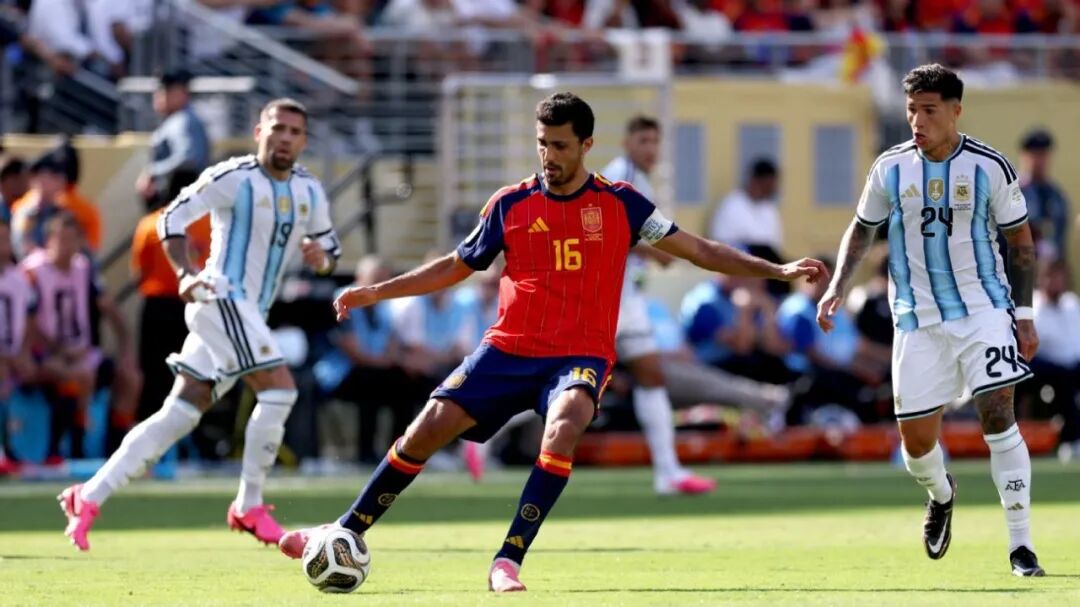
The Spanish team adhered to the principle that "the hive is always stronger than a single bee," making high-intensity, structured forward pressing and immediate counter-pressing their tactical foundation. Data showed that Spain completed 353 ball recoveries across all matches, the highest in the tournament, and their high-pressing success rate of 38% also ranked first among all teams.
6. Dark Horses' Fast Counterattacks
Dark horses like Egypt and Morocco took fast counterattacks to the extreme. In the Round of 16 against Argentina, Egypt showcased the advantage of rapid counterattacks. In the 67th minute, Egypt launched a fast counterattack from deep, with Hassan delivering a cross from the byline and Ziko following up to score. The entire counterattack was completed in the blink of an eye. Had Argentina not completed their comeback in the final 13 minutes, Egypt would have made history with this sharp counterattack. In the same round, Morocco played a classic fast counterattack in the 82nd minute, with Díaz breaking into the penalty area and cutting back to Ounahi, who scored a brace, cementing Morocco's status as a dark horse of the tournament.
(c) Innovative Tactics: Unconventional Approaches Breaking Traditional Boundaries
This World Cup saw the emergence of several disruptive tactical ideas, completely breaking traditional football logic.
1. Kick-off Tactical Innovation
Some teams chose to kick the ball directly out of play at kick-off, voluntarily ceding possession to gain a favorable position to press and contest the ball in the opponent's half. This is an active sacrifice of one possession opportunity in exchange for space to launch an attack in a more dangerous area closer to the opponent's goal, achieving optimal allocation of time and space resources.
2. Complete Transformation of the Goalkeeper Role
The goalkeeper is no longer just the last line of defense but increasingly acts as an "extra outfield player" involved in attacking buildup. At this World Cup, only 52% of goal kicks were taken directly by the goalkeeper, a significant drop from 91% in the previous edition. Goalkeepers participating in backline passing and directing the play has become the norm.
(d) Targeted Defending: Systematic Evolution of Star Neutralization Tactics
Targeted defensive tactics against superstar players have become increasingly sophisticated, forming a three-dimensional defensive system of "trap anticipation, pass lane blocking, and dynamic cover."
Case Study: Spain Neutralizing Mbappé
In the semi-final, Spain defeated France 2-0, showcasing textbook targeted defending:
1. Pre-set Offside Trap: Whenever France prepared to pass to Mbappé, the Spanish defensive line would step up collectively. Mbappé was caught offside three times, never getting a chance to shoot freely.
2. Goalkeeper Sweeping: Once the offside trap was bypassed, goalkeeper Unai Simón quickly rushed out of the penalty area to clear the ball, making three successful clearances outside the box, averting several dangerous situations.
3. Cutting the "Trio" Connection: Spain did not merely double-team Mbappé; they prioritized blocking Olise's passing lanes, using double-teaming from Rodri and Ruiz to neutralize the key hub of France's front line.
Under this combined assault, Mbappé managed only 3 shots, all from outside the box and none on target; France completed only 3 successful crosses out of 22 attempts, their attack completely paralyzed.

"Space and time" are the underlying logic of football tactical competition. The expansion to 48 teams fundamentally reshaped the tournament structure from a spatiotemporal perspective.
(a) Format Change: Expanded Schedule Forces Squad Depth Upgrade
After expansion, the champion team needed to play 8 matches, one more than previous editions, across three countries (USA, Canada, Mexico) with significant climate and venue variations. This placed extreme demands on squad depth, physical reserves, and rotation capability, making bench strength a formal factor determining a team's ceiling.
1. Spain's Title Built on Squad Depth
Spain's path to the title perfectly demonstrated the tactical value of squad depth. There was no significant drop-off in quality between starters and substitutes; replacement players could seamlessly fit into the system and change the course of matches. In the knockout stages, Merino came off the bench to score winners in consecutive matches against Portugal and Belgium; in the final, substitutes Nico Williams and Ferran Torres revitalized the attack, with Ferran Torres scoring the extra-time winner to secure the title. A stable rotation system and deep squad reserves allowed Spain to maintain a high level of competitiveness throughout the demanding schedule. Spain's A/B squad rotation model was a product of this context, averaging approximately 4.125 rotations per game—not a luxury, but a competitive necessity.
2. Argentina's Physical Crisis
In contrast, Argentina over-relied on veterans like Messi, with limited room for rotation and insufficient wide talent. They averaged about 4.5 rotations per game, with players bearing significantly higher high-intensity running loads. Before the Round of 16, they had battled Cape Verde for 120 minutes, then faced Egypt with less than 4 days' rest. The dense schedule led to player physical exhaustion, causing a severe disconnect between attack and defense, ultimately leaving them passive, exposing the fatal weakness of a thin squad and imbalanced physical management. Insufficient rotation translated into visible physical depletion after the semi-final, which culminated in the extra-time period of the final. Messi ran a personal tournament-high 8.37 km in the semi-final—a testament to his will but also evidence that the system failed to "conserve energy" for its core player.
3. France's Precise Physical Management
France, on the other hand, demonstrated the advantage of half-time tactical adjustments and precise physical management. Deschamps' coaching hallmark is his ability to correct errors at halftime and activate players through rotation. Of France's 16 goals in the tournament, 11 came in the second half. The team steadily rotated in the group stage and knockout rounds, preserving core players' energy for tough matches. Even after losing to Spain in the semi-final, they quickly regrouped for the third-place match, using a massive halftime rotation and formation switch to stage an epic comeback, highlighting the importance of squad depth and tactical adaptability.
The load difference left clear marks on the path to the final. Spain never played extra time in their first 7 matches, never trailed, and entered the final with 6 clean sheets, with goalkeeper Unai Simón setting a World Cup record of 650 consecutive minutes without conceding. Argentina, on the other hand, was pushed to the brink three times in 4 knockout matches: the Round of 32 against debutants Cape Verde went to extra time; the Round of 16 saw them 2-0 down to Egypt before winning 3-2; the semi-final saw them score two goals after the 85th minute to overturn a 1-0 deficit against England. These two paths converged in the final's extra time, and the result had a structural inevitability about it.
(b) Spatial Competition: Extreme Attack and Defense of Compression and Penetration
The tactical competition of modern football is fundamentally a contest for time and space on the pitch. This tournament established a clear offensive and defensive spatial logic: underdogs used low blocks to compress space in front of the penalty area, neutralizing the possession advantage of stronger teams; top teams used rapid attack-defense transitions and wide runs to pull the defense out of shape, actively creating attacking spaces for penetration.
1. Defensive "Space Compression"
Underdogs commonly used low blocks, shrinking the formation and compressing space in front of the penalty area to counter stronger teams. In the final, Argentina displayed extreme space compression in defense, shrinking their defensive line to a narrow area of 36 meters wide and 24 meters deep, with the last line of defense just 18 meters from the goal. Through compact positioning, they blocked all attacking channels in front of the penalty area, momentarily stalling Spain's high possession game.
2. Attacking "Space Creation"
Top teams, on the other hand, used rapid transitions from defense to attack to create space before the opponent's defense could reorganize, or used full-back overlaps and diagonal passes to pull the defense out of shape, seeking gaps between the defensive lines. Facing Argentina's low block, Spain used Rodri's double-line distribution, Pedri's repeated reception and turning on the flank, Gavi's off-the-ball runs to occupy the defensive line, and Yamal's one-on-one threat on the right to force at least two defenders to cover him, constantly stretching Argentina's defense, creating defensive vulnerabilities, and gouging out attacking openings in the densely packed space.
3. England's "Spatial Suicide"
After taking the lead in the semi-final, England actively shrank their formation, ceding possession and space to the opponent. Having successfully contained Messi in the first half, they voluntarily surrendered both possession and attacking space after taking the lead. Ultimately, they lost momentum and the match to Argentina's sustained pressure, confirming the core logic of modern football: "He who controls the space controls the game."
4. France's Space Avoidance and Rapid Penetration
France's tactical use of space was highly representative, based on a counter-attacking logic of space avoidance and rapid penetration. When facing high pressing from strong teams, they voluntarily gave up ineffective possession in midfield, compacted their defense to save energy, and compressed their own defensive space. Once they regained possession, they relied on the extreme speed of Mbappé and Dembélé to instantly penetrate the space left behind the opponent's advancing defense, scoring quick counter-attack goals. In the Round of 16 against Paraguay and the quarter-final against Morocco, France used this spatial logic to exchange low possession for high efficiency scoring, precisely mastering the spatial code of strong-versus-weak encounters.
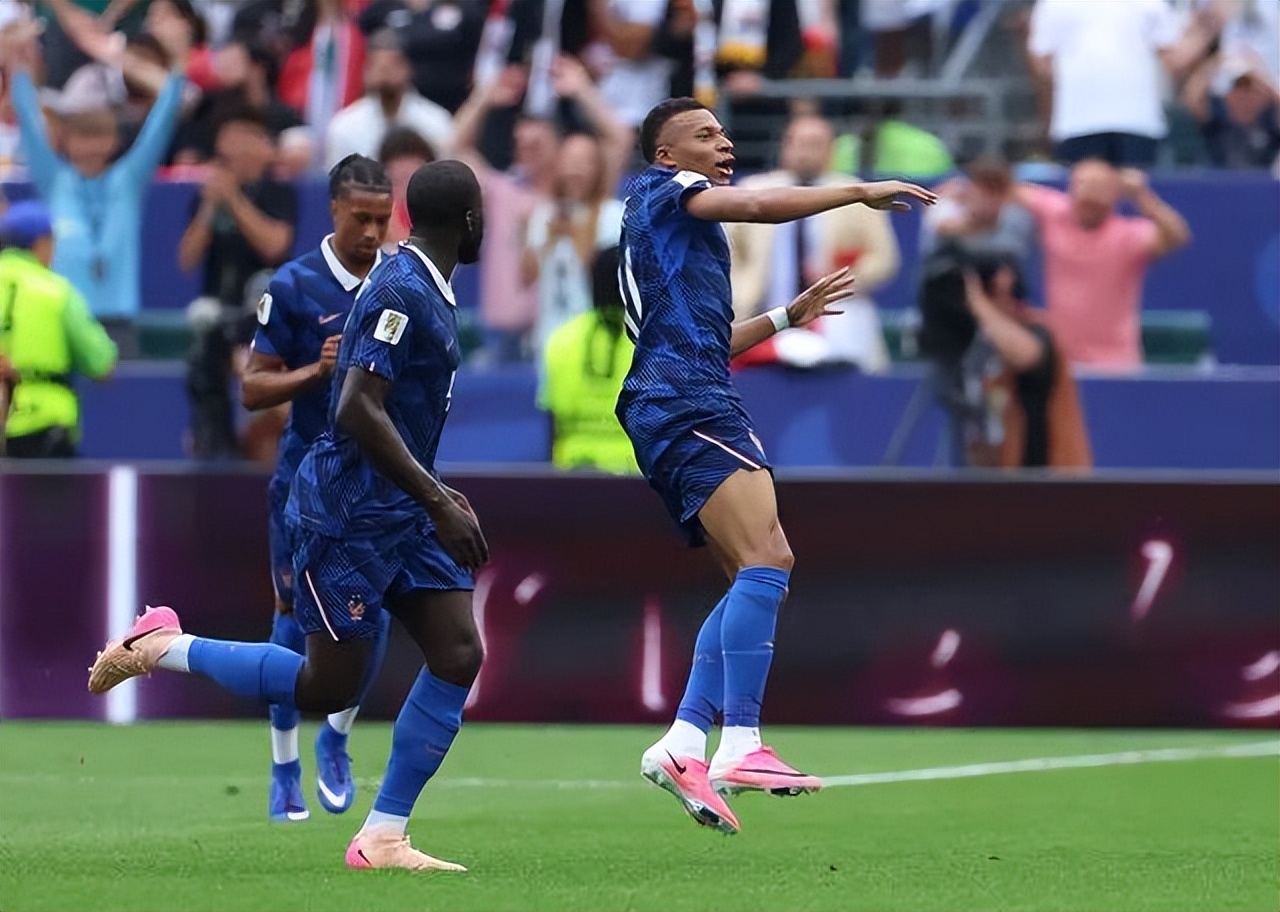
(c) Time Competition: From Controlling Tempo to Winning Back the Ball
The core purpose of high pressing is to compress the opponent's time on the ball. The tactic of "kicking the ball directly out of play at kick-off" is an active sacrifice of one possession opportunity in exchange for space to attack in a more dangerous area closer to the opponent's goal.
Accelerating attack-defense transitions has become a decisive factor in matches. After losing possession, Spain regained the ball in an average of just 10-11 seconds, while their final opponents Argentina needed 13 seconds. This subtle difference meant Spain could always organize a second attack faster than their opponents, keeping the defense in a constant state of chaos.
In terms of macro-tactical trends, this tournament displayed clear common characteristics. Many teams actively dropped into a 4-4-2 in defense to compress central space, forcing the opponent to switch play to the wings, then used diagonal passes (passes that cut across the channels between the lines) to tear open the defense—this has become a standard method for breaking down compact defenses. Additionally, using a "false 9" (e.g., Germany's Havertz) dropping deep to receive the ball, pulling the center-back out of position, combined with a more fluid midfield for positional interchange and late runs, thereby creating local numerical superiority behind the striker, was also one of the most common attacking methods at this tournament. It greatly tests the decision-making ability of modern center-backs in terms of "stepping up" versus "recovering."

Understanding modern football requires the support of data metrics. The 2026 World Cup officially entered the data-driven era. Two core metrics—PAC (Pressure Action Count) and PPDA (Passes per Defensive Action)—precisely quantify a team's defensive aggression, pressing quality, and tactical style, becoming the key to decoding modern football's attacking and defensive systems, completely ending era of experience-based tactical judgment. To ensure rigor and comparability, this article strictly adheres to the official unified standards of the international sports data field.
(a) PAC: Precise Measurement of Pressing Frequency, Coverage, and Quality
Full Name: Pressure Action Count (Total number of off-ball pressing actions)
Standard Definition (StatsBomb/Hudl pressing data standard): The total number of off-ball pressing events across the entire pitch (or any zone) where a defensive player actively closes down a ball carrier/receiver, creating spatial restriction. It only counts the player's active movement to apply pressure; no contact, tackle, interception, or foul is required.
Trigger Condition: A defensive player enters an effective pressing distance of 3-5 meters from the ball carrier, with body orientation towards the ball carrier, limiting passing options. The system records one pressing action. If multiple players press the same ball carrier simultaneously, each pressing player is counted separately for one PAC.
Core Distinction from PPDA Denominator: PAC counts pure off-ball pressure, without ball contest. It is not included in the PPDA denominator. The PPDA denominator only includes defensive actions that involve ball contest and change the direction of the ball (tackles, interceptions, duels, defensive fouls).
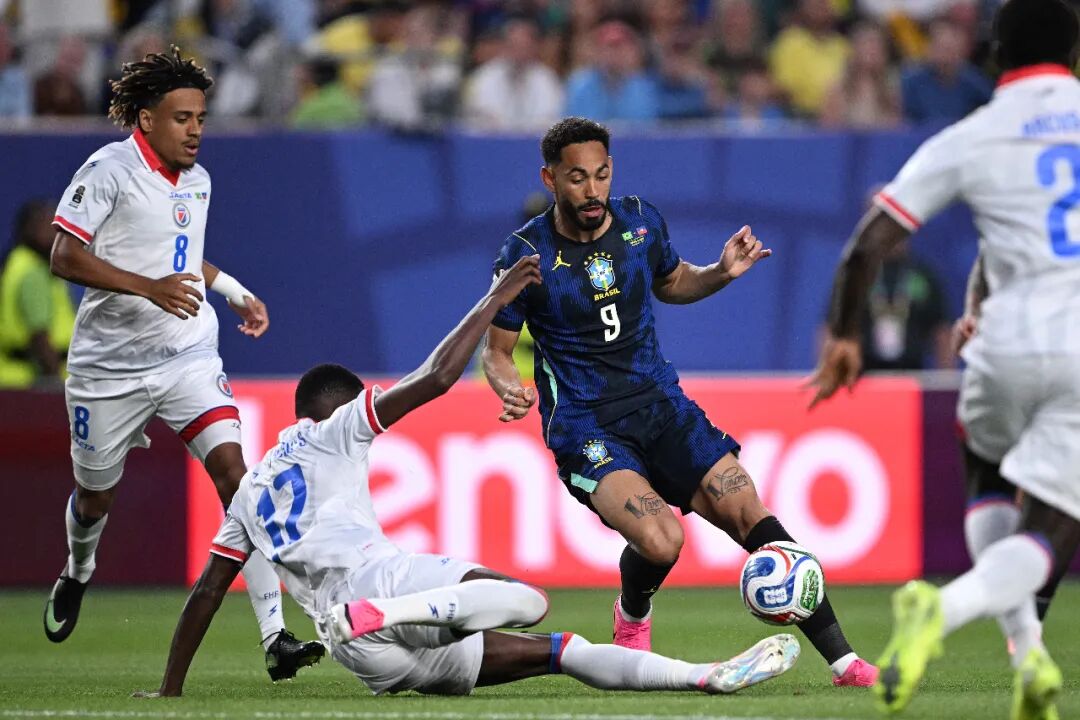
Derived Metrics: PAC per minute (pressing actions per minute), PAC distribution by thirds, opponent pass completion rate under pressure. These are used to measure sustained pressing frequency, while zonal success rates reflect pressing quality and hotspot distribution.
The core value of PAC is to measure the frequency, coverage, and zonal efficiency of a team's pressing. Spain's pressing was not blind rushing but highly structured collective action—their high-pressing success rate of 38% ranked first among all teams. In the final, Spain's high-block defensive percentage was 6.9%, compared to Argentina's 3.6%, clearly indicating that Spain pushed the battlefield directly into the opponent's half. The dense distribution of their PAC data in the attacking third, combined with high success rates, was a direct reflection of pressing quality and coverage scope.
France's PAC data showed differentiated tactical characteristics: against weaker teams, they actively increased high-pressing frequency, with PAC values rising significantly, thereby controlling the game tempo; against top teams like Spain, they voluntarily reduced forward pressing intensity, simultaneously increasing PPDA values (i.e., allowing the opponent more passes before organizing defense), abandoning ineffective high pressing, compacting the defense, and focusing on counter-attacks. This demonstrated data-driven flexible decision-making tailored to different opponents. However, this tactic had a clear weakness—once the high pressing failed and counter-attack lanes were blocked, the team lacked a fallback plan for settled possession. In the semi-final against Spain, precisely because their pressing rhythm was neutralized and counter-attack space was shut down, their attack was completely paralyzed.
(b) PPDA: A Measure of Defensive Aggression and Intervention Efficiency
Full Name: Passes per Defensive Action (Average number of opponent passes per defensive action)
Standard Definition (Trainor, 2014; Premier League official, StatsBomb unified standard): In the opponent's defensive 60% of the pitch (i.e., the attacking 60% area: the opponent's entire half plus the first 1/5 of the pitch beyond the center circle), the total number of opponent completed passes divided by the total number of defensive intervention actions by the defending team. It characterizes the team's average tolerance for opponent passes during high pressing.
Numerator: Opponent successful passes (excluding clearances, throw-ins, goalkeeper distributions, and set-piece passes).
Denominator "Defensive Action" fixed to include: tackle, interception, duel, defensive foul. Pure off-ball pressure (i.e., PAC) is not included in the denominator—this is the core distinction between PPDA and PAC.
Formula: PPDA = Total opponent successful passes in the high 60% area / Total defensive intervention actions by the defending team in the same area.
Interpretation: PPDA < 9 indicates high-intensity high pressing; 10-13 indicates moderate pressing; > 14 indicates a tendency towards low block, allowing the opponent to circulate the ball. The lower the PPDA value, the stronger the defensive aggression and the lower the opponent's passing tolerance, reflecting higher pressure intensity during transitions.
Core Value and Examples: At this tournament, Spain's PPDA value was as low as 6.4-8.4, the lowest among all teams, meaning opponents faced a double-team or pressing situation every 6-8 passes. In contrast, Brazil's PPDA in some matches reached 12.5-18.4, reflecting a more passive defensive approach. It was this extreme pressing that allowed Spain to complete 353 ball recoveries throughout the tournament, the highest in the competition.
Data Trend and Tactical Significance: In recent years, the PPDA values of top teams have shown a continuous downward trend, confirming a collective shift in football towards more aggressive defensive structures. This quantitative metric has become a core tool for modern coaches to formulate tactics, assess opponents, and adjust game strategies, providing a quantifiable decision-making basis for high-pressing systems.
(c) Core Comparison Table: PPDA vs. PAC
Metric | PAC (Pressure Action Count) | PPDA (Passes per Defensive Action) |
Object of Measurement | Off-ball pressing actions (pure pressure, no contact with ball) | Defensive contests that affect ball possession (tackles/interceptions/fouls) |
Calculation Form | Absolute count (total number of actions) | Ratio (passes ÷ defensive actions) |
Primary Use | Measures pressing frequency and coverage of pressure | Measures pressing intervention efficiency and tolerance for opponent circulation |
Statistical Area | Entire pitch or any zone | Only the opponent's defensive high 60% area |
Action Criterion Threshold | Low: counts if distance and body orientation are met | High: requires actual ball contest and defensive intervention |
(d) Metric Integration: From Single Data to Tactical Portrait
PPDA and PAC are not substitutes but complementary tactical analysis tools. PPDA answers "how efficient is the pressing"—how frequently the defending team turns opponent passes into ball contests. PAC answers "how frequent is the pressing"—how much pressing resource the defending team invests in off-ball situations.
Taking Spain as an example: their PPDA value was as low as 6.4-8.4, in the lowest range of the tournament, meaning opponents faced an effective defensive intervention every 6-8 passes. Simultaneously, their high PAC density in the attacking third was extremely high, with the front three creating sustained spatial restriction in the opponent's half through structured cooperative pressing. This combination of "low PPDA + high PAC" precisely characterizes a team that uses pressing as a means of initiating attack, not merely as a defensive action.
In contrast, Morocco's controlled low block was characterized by "high PPDA + low PAC": they allowed the opponent to complete many passes in their own half (corresponding to a high PPDA), but did not actively invest large amounts of off-ball pressing resources (corresponding to a low PAC), instead relying on compact central blocking to achieve very low expected goals conceded. This data profile stands in stark contrast to Spain's, proving that two completely different tactical philosophies can both achieve top-level competitiveness.
For coaching staff, the combined application of PPDA and PAC is clear: pre-match, they can predict the opponent's pressing style (pulsing/continuous/low-block) based on historical data; in-match, they can adjust pressing line height and trigger conditions based on real-time data; post-match, they can quantitatively evaluate the input-output ratio of the pressing strategy. The 2026 World Cup marked the transition of data analysis from a "post-match review tool" to a "real-time tactical operating system," with PPDA and PAC being the core analytical language of this transformation.
(e) Anatomy of the 308 Goals
The 308 goals scored at this tournament were not simply a product of the quality gap from expanding to 48 teams. Underdogs showed an unprecedented willingness to build attacking systems, significantly increasing their frequency of shots from open play. Their strategy was essentially "using quantity to offset quality."
(f) The Headed Goal Paradox and Set-Piece Industrialization
The proportion of headed goals has declined for three consecutive World Cups, but the conversion accuracy of headed shots actually reached a three-tournament high. "Headed assists"—where the first contact flick-on creates a second-contact scoring opportunity—increased from a total of 2 in the previous two World Cups to 10 before the Round of 16 at this tournament. This means the design philosophy of set-piece attacks is shifting from directly aiming for a header to a layered industrial process of "first-contact flick-on + second-contact shot." England was the biggest beneficiary of this trend: 32 headed shots resulted in 5 goals, with a cumulative expected goals (xG) of 2.9, far ahead of second-place Brazil's 2.3.
(g) The Final-Pass Gap
A deeper structural gap lies in the final pass. The proportion of goals from progressive passes by top teams rose from 33% in 2018 to 45% in 2026, while bottom-tier teams remained around 29%, with the gap widening from 3 percentage points to 16 percentage points. The traditional survival strategy of underdogs—deep defense + winning penalties—has become ineffective: in 2018, 35% of bottom-tier team goals came from set pieces, almost all penalties; this dropped to 10% in 2022; and in the 2026 group stage, it was zero. Replacing this, the proportion of opportunistic goals (from opponent errors) doubled to 33%. Underdogs have learned to advance the ball into the attacking third but still lack the ability to execute the final pass through a compact defense. For coaches, this is a more alarming signal than the scoreline difference: the skill gap is not in fitness or basic organization but in top-level decision-making and final execution precision.
(h) The Relative Effect of Individual Ball Progression
The tactical data of the 2026 World Cup shows a systemic gap in attacking methods between elite teams and sub-elite teams: elite teams create significantly more and higher-quality attacking opportunities through ball progression; sub-elite teams rely more on passive counter-attacking, with their attacks heavily dependent on opponent unforced errors.
A typical embodiment of this trend is the collective rise of a new generation of wingers like Yamal, Nusa, and Doué. They possess exceptional one-on-one dribbling ability, capable of driving the ball into dangerous areas through continuous dribbling and beating defenders in the tight spaces created by high defensive lines and man-marking, consistently creating high-value attacking opportunities.
In the context of the increasing prevalence of high pressing, individual ball progression ability has become the most scarce tactical resource. It is not only a core means for a team to create expected threat and generate shooting opportunities but also a key competitive advantage indicator distinguishing top teams from sub-elite teams.
(i) The Data-Driven Tactical Decision Revolution
A more precise metric for quantifying pressing is PPDA, the average number of passes the opponent completes before the defending team makes a defensive action and regains the ball. This data clearly quantifies the intensity of Spain's "hunting" style of football and explains why they could always stifle the opponent's attack in its infancy.
The 2026 World Cup marked the official transition of data analysis and artificial intelligence from a "post-match review tool" to a "tactical operating system." Coaching staff can now adjust defensive positioning in real-time based on the opponent's heat map, precisely decide substitution timing based on player physical data, use AI to predict the opponent's tactical layout and core weaknesses, and monitor player load in real-time via wearable devices to dynamically optimize training intensity. This data-driven decision-making not only changed preparation methods but also real-time match management: the cooling break was transformed into a "tactical timeout," where coaches could display real-time video data and adjust pressing shapes and trigger conditions on the spot.
However, data ultimately serves human judgment. As the 2026 World Cup demonstrated, the most successful teams are always those that can perfectly combine data insights with tactical intuition.

The 2026 World Cup definitively marked the end of individual heroism in football. Modern football competition has evolved into a comprehensive system confrontation of tactical systems, team collaboration, and physical management.
(a) Macro-Level Model Shift: From Factor Advantage to Structural Advantage
The four semi-finalists presented a complete sample of the model contest: Spain conceded only 1 goal in 8 matches, kept 7 clean sheets, and their last three knockout-stage winning goals all came from substitutes; Argentina, with "full stars but a half-baked system," finished as runners-up; France, led by Mbappé, and Norway, led by Haaland, were eliminated in the semi-finals and quarter-finals, respectively—teams with top individuals all fell to opponents with more complete structures.
The essence of a tournament is the management of randomness. A single match is full of randomness; the role of a system is to minimize the variance of randomness: using high possession to reduce the opponent's shot count, using a compact defense to block counter-attack channels, and using deep squad depth to hedge against injury and fatigue. When Spain could limit the opponent to just 2 shots per match, and in the semi-final held France's top scorer Mbappé to 3 shots, all off target, randomness was essentially expelled from the match. The championship outcome thus presented as a clear product model: system completeness × squad depth × in-game management.
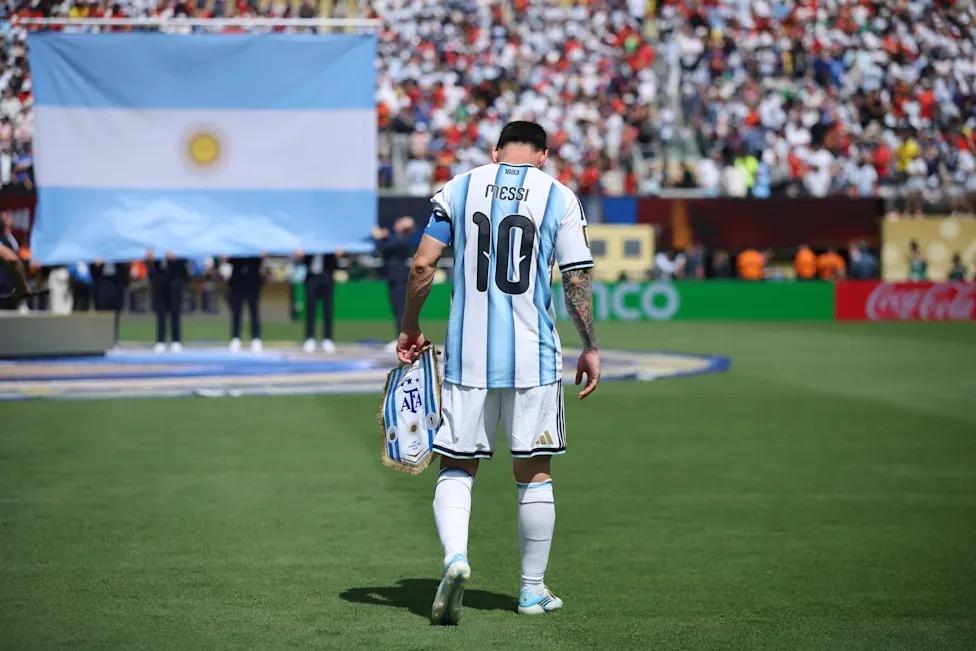
Team-building logic is shifting from "gathering factors" to "designing structure." To assess a team's tournament prospects, a three-factor checklist should be used to score each item, rather than just looking at the list of star players and the formation label. Argentina's second-place finish was the limit of factor advantage—Messi completed his sixth World Cup with 8 goals and 4 assists, winning the Silver Ball, but the final's coordinated defensive effort from Spain compressed him to the point of "making Messi not exist." This limit itself is the footnote to the end of the old model.
The "curse" of the FIFA ranking continued: since the ranking system was established in 1992, no team entering the World Cup as the world number one has ever won the title. This edition's top-ranked Argentina also failed to break the spell. The ranking reflects factor accumulation, while the championship tests structural quality—the long-term divergence between the two is the statistical projection of this model shift.
(b) The Engineerability of Tactical Systems and the Decline of Star Dependence
Spain's title marked the success of a "replicable tactical model." Their strength did not rely on unique geniuses like Xavi or Iniesta but on the entire system operating with the precision of a well-oiled machine. Whether substituting in Merino or Nico Williams, the team's tactical execution and pressing intensity did not noticeably drop. This transformation from "hypnotic possession" to "hunting-style attack and defense" elevated possession football from an art form dependent on specific geniuses to an "engineerable tactical model."
In contrast, Argentina, which overly relied on Messi's individual ability, saw its entire attacking system collapse once Messi was neutralized by Spain's "three-layer siege" tactics. Argentina managed only 2 shots, none on target, for the entire match—this was not accidental but a necessary consequence of their entire attacking system being completely suppressed by Spain:
1. Backline passing was blocked: Spain's high block defensive positioning and pressing cut off Argentina's passing lanes from the back, forcing their midfield hub Enzo Fernández to constantly receive the ball with his back to goal, unable to organize effective attacks.
2. The forward fulcrum was isolated: Messi repeatedly dropped deep to receive the ball, but every time he turned, he was surrounded by 2-3 Spanish players, lacking off-the-ball support from teammates.
3. Defensive compromises: Argentina committed 25 fouls, received 6 yellow cards and 1 red card, while Spain had none. This reflected Argentina's frustration and desperation under total tactical and technical inferiority.
This systemic collapse was not due to individual player underperformance but the inevitable result of the tactical system being completely suppressed. When a team's attacking initiation, midfield organization, and forward finishing are all simultaneously cut off by the opponent, the match becomes a one-sided tactical lesson.
(c) Layered Defense: The Formation of a Three-Layer Structured System
Solid defense is no longer solely the responsibility of the defensive line but a collective task for the entire team. An ideal defense should have a three-layer structure: "press-block lines-defender."
Spain was a perfect example: the forwards acted as the first barrier, responsible for high block pressing; the midfield was the second barrier, responsible for cutting off opponent passing lanes; the defensive line was the final barrier, responsible for clearing danger in front of the goal. The three layers were linked and seamlessly connected.
Argentina, on the other hand, frequently showed defensive vulnerabilities because their defense often only had the last barrier, with the midfield interception missing and forward pressing insufficient, leading to frequent defensive breakdowns.
France's defensive system combined flexibility and adaptability: in regular matches, they relied on a 4-2-3-1 with a double pivot to form a midfield barrier, with the front three dropping back to help defend, forming a complete defensive chain. In the match against Morocco, they targeted the opponent's wide passing, with the midfield constantly pulling and consuming the opponent's defense, striking after 60 minutes to win, demonstrating the effectiveness of layered defense. However, the system had a stability weakness: in the third-place match against England, the defensive layers collapsed in the first half, with wide areas exposed, conceding 6 goals, revealing insufficient fault tolerance under high-intensity pressure.
(d) Storm Pressing and Scientific Physical Management
Sustained high-intensity pressing throughout the match is a huge physical challenge, so more teams are choosing to launch short, high-intensity "pressing storms" during the game.
Case Study: Uruguay's Storm Pressing
In the match against Cape Verde, Uruguay launched a high-intensity pressing storm during the 45th-51st minute period (7 minutes), accumulating an expected goals (xG) of 0.9-1.1 and scoring two goals. This "storm-style" pressing disrupts the opponent's rhythm while rationally distributing the team's physical energy, becoming a new tactical trend.
Case Study: France's Phased Pressing
France also adapted this tactical logic: in the second half, the team had more physical reserves, with pressing intensity and counter-attacking efficiency significantly increasing. The proportion of goals scored in the second half far exceeded the first half, a perfect combination of scientific physical management and phased pressing tactics. Top teams began dividing the match into four "tactical quarters," using FIFA's mandatory cooling breaks to reset pressing instructions and precisely manage player output.
(e) The Economics of Pressing: From Intensity to Input-Output Ratio
Sustained 90-minute high-intensity pressing was collectively abandoned at this tournament. The hot North American summer, travel across three time zones, and the continuous load of 8 matches forced all teams to do the math. Pressing was compressed into short pulses of 4-12 seconds, triggered by specific signals: the opponent's center-back miscontrol, receiving the ball with back to goal, or a lateral pass to the weak side. The tournament thus differentiated into three typical models.
The first type was Spain's sustained cooperative pressing—their PPDA was in the lowest range of the tournament, but they used selective deployment rather than uniform distribution across the pitch: only when the scoreline, physical condition, and opponent's passing quality allowed, did they raise the pressing to maximum intensity.
The second type was the pressing pulse of France and Norway: a single high-intensity press lasted 8-12 seconds, organized into calculated windows of 4-6 minutes at the match level, after which they immediately retreated and reorganized.
The third type was Morocco's controlled low block—allowing the opponent to complete many passes in their own half but using compact central blocking to achieve very low expected goals conceded.
The FIFA Technical Study Group confirmed a strong correlation between quick counter-pressing and winning. But the evaluation standard for pressing has fundamentally changed—it's not about intensity but about the input-output ratio. A team that can create shots within its pressing windows doesn't need to press all over the pitch. The US team provided a quantitative sample: in their 4-1 win over Paraguay, they completed 16 high pressing actions to win the ball, with 3 directly leading to shots and 1 resulting in a goal. The true moat of top teams is the quality of the first forward pass after winning the ball—it determines whether the counter-press directly turns into a shot or merely initiates another phase of settled play.
Trigger signals can be divided into three categories: individual error type (center-back miscontrol, goalkeeper slow to distribute), positional type (opponent receiving with back to goal, full-back receiving facing the touchline), and passing direction type (weak-side lateral pass, back pass). Training should shift from "total team running volume accumulation" to "trigger signal recognition + pulse cooperation" drills, while abandoning the moralized evaluation of "the higher the press, the better"—Morocco's controlled low block is equally an efficient solution.
The most underestimated link in the pressing chain is the second ball (the contest for the loose ball after a first contact header or clearance): the second phase after an opponent's clearance is the most frequent scenario for losing possession, because both teams' formations are in their most disorganized state at that moment. Spain's coordinated double-team on the second ball in the final was the key to cutting off Argentina's counter-attack initiation chain. The contest for the second ball should be listed as a separate training item.
(f) Transitions and Tempo Changes: The Decisive Principle
Norway's 2-1 elimination of Brazil, the US's heavy defeat to Belgium, and Argentina's two near-eliminations—these upsets share a common feature: the team with more possession was punished during transitions. A significant proportion of goals at this tournament occurred within 10 seconds of winning the ball, with transitions replacing set-piece attacks as the primary goal-scoring phase.
The Norway vs. Brazil match was a textbook case: Solbakken's 4-3-3, with Berge anchoring the structure, Ødegaard responsible for immediate vertical passes, Haaland leading the line, and Sørloth and Nusa stretching the width from the flanks; Norway's average expected goals per match was 1.79, and their big chances created ranked fourth in the tournament. Under Norway's targeted pressing in key areas, Brazil's midfield and defense lost passing accuracy, with their high defensive line repeatedly pierced by Sørloth's rapid right-wing progression and Ødegaard's through balls—the image of three Norwegian players unmarked inside the penalty area to take a shot is the most direct teaching material for "absent defensive cover."
Two core principles were established: First, the institutionalization of the defensive cover. When in possession, at least a "2+1" defensive structure (two center-backs plus one defensive midfielder) must be maintained, with both full-backs not allowed to cross the halfway line simultaneously. The key in defensive transition is to delay—not to rush into tackles, but to use positional blocking and tactical fouls to buy 3-5 seconds for the team to recover. Second, the principle of tempo variation: there is a decision tree at the moment of transition—whether the first touch is to cut inside, go to the byline, or pass back must be estimated before winning the ball. In terms of macro tempo, the rhythm difference of "actively slowing down to lure the opponent and then suddenly accelerating" is more lethal than continuous fast tempo.
A distinction must be made between two types of slowing down: Spain's slowing down in the 60th-75th minute of the final was an active lure while keeping the ball, a champion-level skill; while passively ceding possession to slow down is a symptom of defeat—England's 3-2 narrow win over Mexico in the Round of 16 saw them have only 33.2% possession, the lowest for the team in a World Cup match since 1966, and their defense was forced to make 48 clearances, the highest since 1990. The same low possession, one is an actively implemented skill, the other a passive alarm signal—the difference lies in whether the surrender of the ball is part of the tactical design.
Implication for underdogs: A low block without a vertical speed outlet is only passive defense; the transition system must require a sprinter—i.e., the formation must contain a fast player who can repeatedly attack the space behind the defensive line. Norway provided a standard template for a sub-elite team: compact mid-low block to lure the opponent in, Haaland and Sørloth directly attacking the vertical space, using the lowest possession cost to exchange for the highest single-threat value.

The popularization of systematic tactics has forced an iteration of individual player capabilities. Traditional fixed positional boundaries have been broken, with players moving towards role specialization and all-round ability.
(a) Goalkeeper Role Reconstruction: The Sweeper Keeper as a Top-Level Standard
The modern goalkeeper is no longer limited to shot-stopping but bears multiple responsibilities: backline organization, sweeping outside the box, and providing a safety net for the defense. He has become a core component of high-tactical systems, completing a third functional revolution.
1. "Sweeper Keeper" Unai Simón
Spain's goalkeeper Unai Simón, with his wide range of activity and well-timed sweeping, became the last line of defense after Spain's high defensive line was breached. He conceded only 1 goal throughout the tournament, kept 7 clean sheets, and set a World Cup record of 650 consecutive minutes without conceding. He modestly stated, "I didn't have many saves to make; the defensive success was the credit of the entire team."
2. "The Great Wall" Dibu Martínez
In the final, Argentina's goalkeeper Emiliano Martínez made 11 saves in regular time, setting a new record for saves in a World Cup final. Had it not been for his heroic performance, the match would have been decided long before the end of regular time. This reminds the industry: in the era of systems, shot-stopping remains a core ability of goalkeepers.
3. Grassroots Hero Vozinha
In the first match of Group H, Cape Verde's 40-year-old goalkeeper Vozinha, valued at only €50,000, made a series of miraculous saves against the tournament favorites Spain, helping his team secure a 0-0 draw—the biggest upset of the tournament so far. This demonstrated the tactical value of a goalkeeper's individual shot-stopping ability, proving that passing organization and shot-stopping are no longer the exclusive domain of elite football.
The rule variable reshaped the goalkeeper's function: the 8-second possession limit and the 5-second countdown for goal kicks curbed time-wasting tactics from a rule perspective; the high defensive line required the goalkeeper to evolve into a sweeper keeper, protecting the space behind the defense for 35-50 meters; the average progression distance from short passes initiating attacks was significantly higher than from long kicks, restructuring the logic of backline attack initiation—the goalkeeper is now the first passer of the attack organization.
Three quantitative evaluation dimensions for observing goalkeepers: First, save redundancy—the difference between actual goals conceded and expected goals conceded: Spain conceded 1 actual goal, with expected goals significantly higher, so Simón's individual peak performance should not be drowned out by the system's contribution. Second, sweeping protection—the range, frequency, and success rate of defensive actions outside the penalty area, measuring its value as an "11th outfield player" for deep protection. Third, passing progression—pass success rate under pressure, progression distance, and structured attack initiation ability, measuring its value as an organizational starting point.
(b) Midfield Function Specialization: The Two-Way Adaptation of "Destroyer" and "Metronome"
The function of midfield players has been further refined: on one hand, teams need "destroyers" like Enzo Fernández who can intercept, protect, and tackle; on the other hand, they need "metronomes" like Rodri who can control the tempo and orchestrate the game.
The four semi-finalists all configured core midfielders who coordinate attack and defense: Spain's Rodri, Pedri, and Fabián Ruiz; England's Rice; France's Rabiot and Kanté; Norway's Ødegaard. Rodri made 811 passes with a 93.2% success rate, both tournament highs; he made 27 successful tackles, the most in the tournament; he won the Golden Ball award, redefining the value of the defensive midfielder position, a perfect combination of "destroyer" and "metronome."
Midfield function has been refined into two complementary types: one is responsible for interception and protecting the space in front of the defense, determining the team's floor; the other is responsible for passing distribution and controlling the tempo, determining the team's ceiling. A deeper core ability is information processing: scanning the field in the 0.5 seconds before receiving the ball to form a mental map of the pitch, then making a choice between a safe pass and a penetrating pass within 1-2 seconds of receiving the ball. Top midfielders also generally have the habit of receiving the ball in a half-turn (sideways to the ball, allowing vision to cover both the incoming ball and the forward area), making the first touch already conducive to forward progression. Scanning determines how many options you see, decision determines which one you choose.
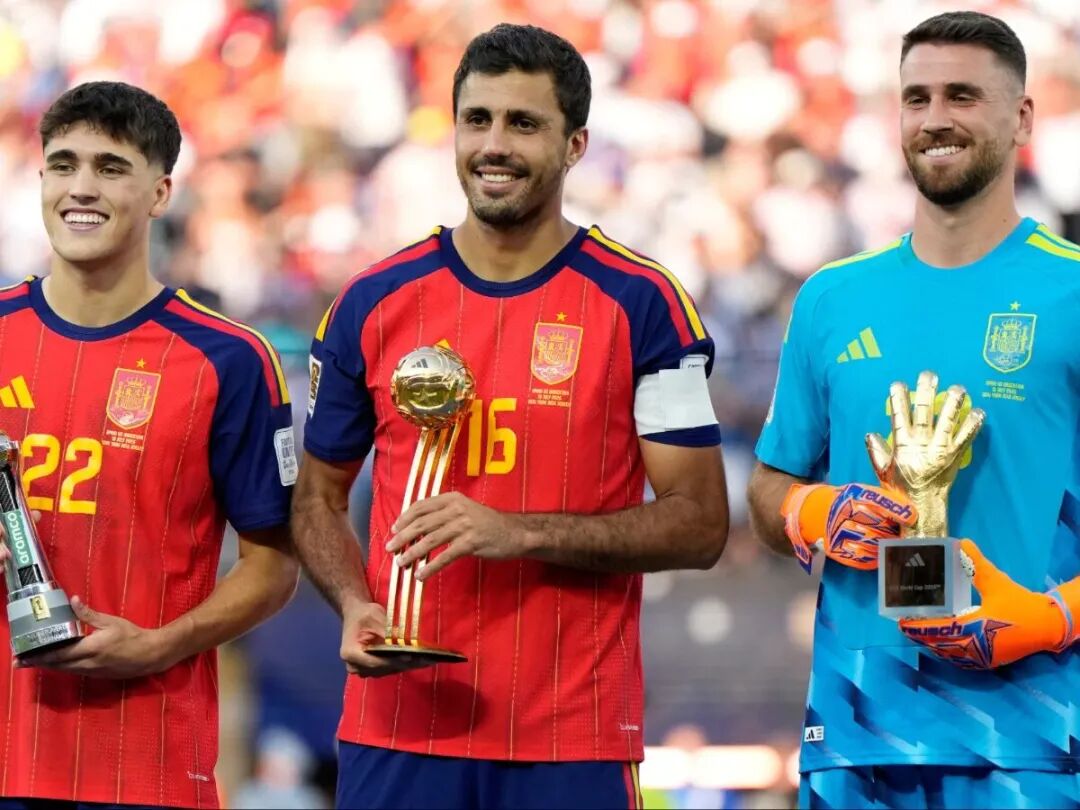
Data shows that the scanning frequency of top midfielders in the 0.5 seconds before receiving the ball is about twice that of average players, with Rodri at the highest level; Ødegaard's penetration decision ratio in the central area in front of the penalty area was among the highest in the tournament. Top midfielders account for over 35% of touches in transitions—they are both the starting gun for attack and the fuse for defense.
The hierarchy of midfield division is clear: interception determines the floor, tempo determines the ceiling, and tempo variation determines the championship. The team-building order should prioritize the central axis—first lock in dual-function midfielders and the goalkeeper, then supplement the wings and forward line. Youth development evaluation should shift from traditional technical tests to information processing speed tests, making scanning and decision-making measurable core metrics.
In the final, Argentina's central axis was completely destroyed by Spain's high pressing. Enzo was constantly receiving the ball with his back to goal throughout the match, while De Paul was running himself ragged, unable to play his role. In contrast, Spain's Rodri precisely controlled the attack-defense tempo, continuously distributing the ball on both sides to stretch Argentina's defense. The midfield gap between the two teams directly determined the match's outcome.
France's midfield exhibited multi-functional integration features. The double pivot combined interception defense with short-passing distribution, capable of both forming a defensive shield to block opponent high penetration and quickly releasing the ball to connect the front line for counter-attacks. This perfectly suited the team's counter-attacking tactics, making them a core hub for attack-defense transitions.
(c) All-Round Wing Players: Full-Backs as Wingers, Wingers as Routine Dribblers
Traditional positional boundaries have completely blurred. Full-backs frequently push forward to participate in attack organization, taking on the duties of wide progression and crossing, while also possessing the ability to track back at high intensity, meeting the dual demands of high-pressing tactics in both attack and defense.
Wingers focus on one-on-one duels on the flanks, cutting inside, and linking up, becoming the key weapons for breaking down compact defenses. France's combination of Dembélé, Olise, and Mbappé on the wings combined speed, dribbling, and passing ability, with flexible wing interchanges and deep runs, forming the core support for the team's rapid counter-attacking system.
(d) Positional Fluidity and Player Versatility: Breaking Traditional Role Boundaries
Modern football is undergoing a "positional revolution." Traditional fixed formations like 4-4-2 and 4-3-3 are giving way to more fluid tactical systems, with players' positions becoming more flexible and variable.
1. Inverted Full-Back
In Guardiola's system, full-backs no longer overlap along the touchline but tuck into midfield to participate in build-up. This design both increases midfield numerical superiority and blocks the opponent's central channels for counter-attacks. John Stones at Manchester City and Grimaldo at Bayer Leverkusen are representatives of this role.
2. The Redefinition of the "Deep-Lying Playmaker"
The traditional attacking midfielder is gradually moving back to a position behind the entire midfield. Players like Phil Foden and Youri Tielemans, by dropping deep into their own half to receive the ball, increase the team's control and attacking threat. This "deep-lying playmaker" gains more passing space and time when facing compact defenses.
3. Player Versatility as a Standard Requirement
Modern players not only need to master the duties of their own position but also need the ability to perform flexibly in other positions. This "all-round" model allows the team to adjust tactics according to the match situation at any time, increasing the difficulty for the opponent to predict and respond.
(e) Player Capability Chain: Speed, Perception, and Decision-Making
Rodri winning the Golden Ball award wrote the best footnote for the shift in player evaluation frameworks. The micro-data from review materials provides a more detailed portrait: the scanning frequency of top midfielders in the 0.5 seconds before receiving the ball is far higher than that of average players, with Rodri at the highest level; Ødegaard's penetration decision ratio in the central area in front of the penalty area was among the highest in the tournament. This set of data collectively points to an upgrade in the player evaluation framework: from the traditional "technique + physical" binary model to a new "perception + decision + action" model.
Constructing a complete capability chain: information input (observation and scanning), information processing (decision-making), action output (movement and technique). The comprehensive output is game reading ability—the anticipation and adaptation to the game's flow, opponent's intentions, and spatial changes, i.e., the so-called "perception-action coupling": what you see determines what you do, and how you do it in turn changes what you see next. The "speed" here is not the 100-meter sprint but the "football speed" of pre-anticipated movement before receiving the ball, off-the-ball movement after passing, and reaction speed when pressing. The implication for talent selection: stop measuring speed with a 30-meter sprint; instead, measure the "ball anticipation speed" of where the player arrives before the ball arrives.
In training, this capability chain is strengthened through dynamic interference scenarios that reinforce the "perception-decision-action" loop: small-sided games, limited touches, unequal numbers, random task instructions. La Masia has already listed this as a core training module for players aged 12-16. Through specialized evaluation, the three sub-items should not be trained separately: each item will be distorted if examined in isolation; only when trained and evaluated as a complete chain does it make sense. Game intelligence is not pure talent but a cultivable core competitive advantage—this is an important insight left by this tournament for youth development systems.

(a) Rule Countermeasures on Corner Kicks and Landing Point Shift
Before the tournament, the industry generally expected the "human wall" corner kick prevalent in the Premier League to dominate set-piece battles. But IFAB's pre-tournament clarification on VAR rules—allowing intervention for attacking fouls committed before the ball is back in play, with disciplinary sanctions and a retake of the set piece—directly dismantled this tactic. Referees tightened their calls on blocking the goalkeeper and off-ball players obstructing defenders' runs. The congested corner kick quickly fell out of favor. A detail in the 78th minute of the final was symbolic: before Nico Williams took the corner, referee Vincic specifically blew his whistle to warn Argentina's defenders for pulling during the dead-ball phase—fouls in dead-ball situations were placed under the magnifying glass.
Data confirmed the direction of the landing point shift: in the group stage, the proportion of inswinging corners dropped to 51.2%, while outswinging corners rose to 25%. The outswinging ball lands away from the goalkeeper's control area, forcing the defense's mixed and zonal coverage to cover a larger area, creating space for attacking runs and legal picks, while reducing the risk of attacking fouls—it is the optimal solution under the tightened rule environment.
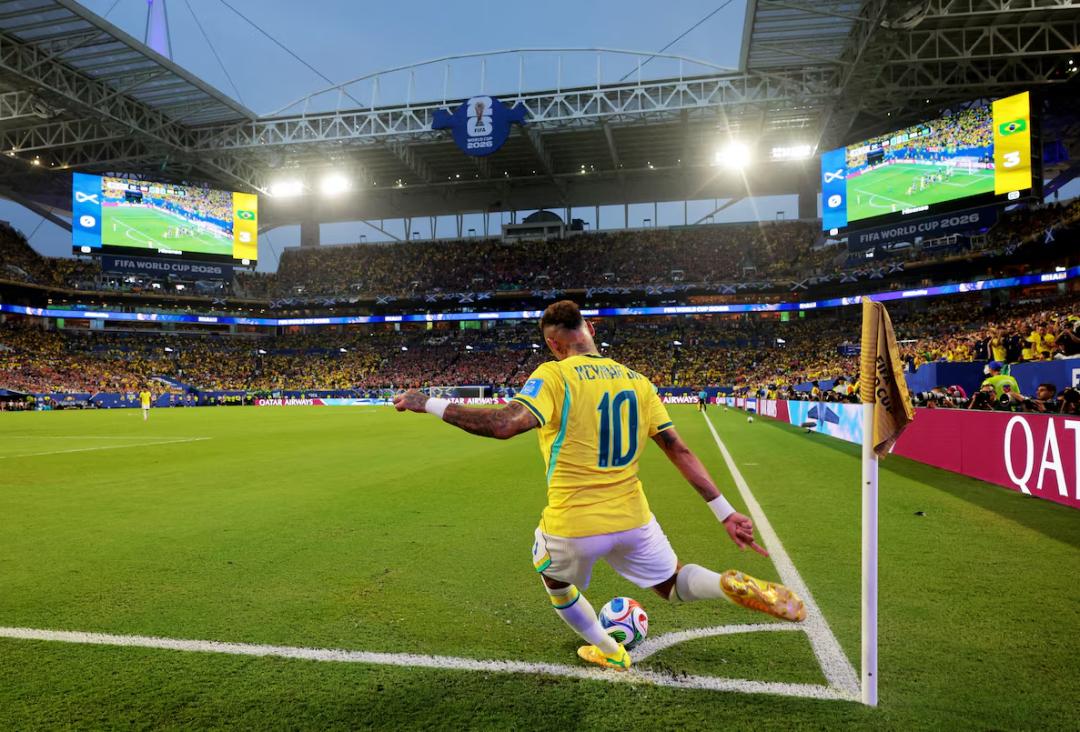
(b) Set-Piece Procedure and Long Throw-In Weaponization
The set-piece shooting process has shifted from directly aiming for a header to a layered design of "first-contact flick-on + second-contact shot": headed assists increased from a total of 2 in the previous two World Cups to 10 before the Round of 16 at this tournament; England's 32 headed shots resulted in 5 goals, with a cumulative expected goals (xG) of 2.9, far ahead of other teams.
The weaponization of throw-ins is another significant trend. Long throw-ins were thrown directly into the penalty area an average of 2.54 times per game, an increase of nearly 40% compared to 2018. Their tactical attribute is now equivalent to a wide free kick, requiring accompanying run-up, screening, and second-ball support designs. Notably, the new 5-second countdown for throw-ins, while compressing time-wasting, also forces the proceduralization of long throw-in drills—the thrower must complete the predetermined plan within the countdown, placing higher demands on the synchronization accuracy between the thrower and the runners.
(c) Offensive-Defensive Imbalance and the Next Arms Race Point
Set pieces are the most cost-effective form of attack for national teams with limited training time—they don't require long-term tacit understanding but only depend on procedural design and drill density. A dedicated set-piece coach will become a standard part of the team. But the imbalance between attack and defense is the next arms race point: England's set-piece attack was elite-level, but their expected goals conceded from crosses was above the median. This "strong attack, weak defense" characteristic suggests that establishing a mixed man-marking/zonal defensive system for set pieces (i.e., a composite structure of zonal marking in the core area and man-marking on dangerous players) is urgent.

(a) The Quality of Players 12 to 18
The gap between champions and semi-finalists is increasingly determined by players 12 to 18 (the substitute bench). Spain's three knockout-stage winning goals all came from substitutes—Merino twice scored winners off the bench, Ferran Torres scored the extra-time winner in the final; Argentina's semi-final win was secured by substitute Lautaro's stoppage-time goal. The counterexample is equally clear: injuries to key players often immediately cause a systemic downgrade. The standard for squad depth is not the accumulation of famous names but the ability to replicate the role equally—a substitute entering the game does not change the system's shape, only the intensity of the match-up. Substitute depth includes three dimensions: quantity of personnel, system compatibility, and positional versatility.
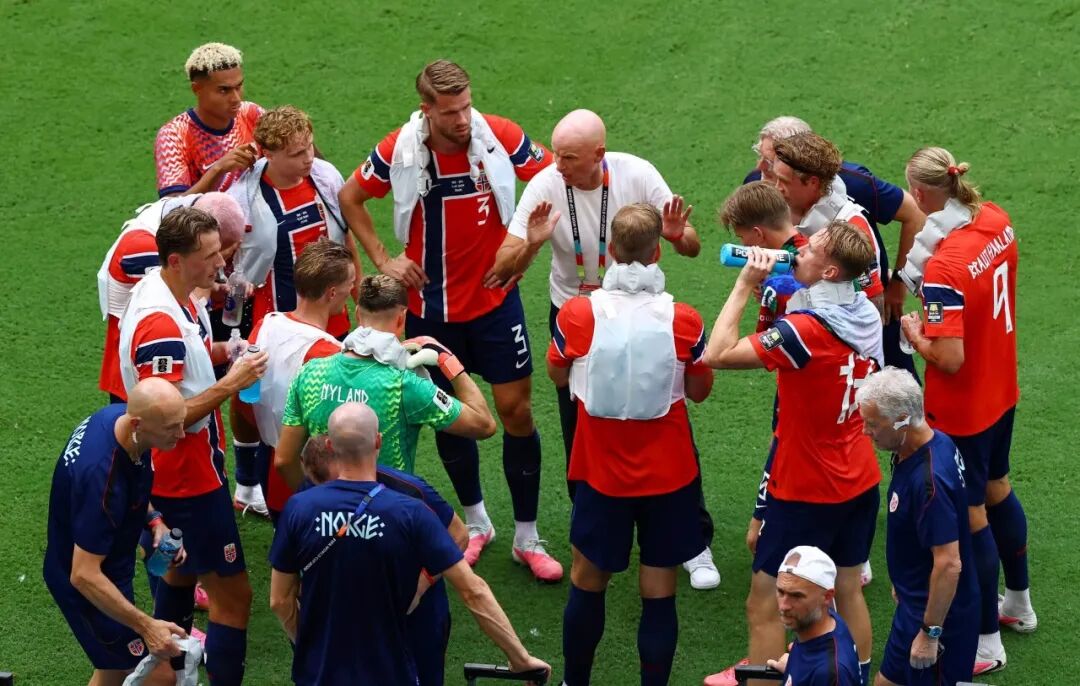
(b) Tacticalization of Cooling Breaks and Institutional Dividends
For the first time, FIFA mandated approximately 3-minute cooling breaks around the 22nd minute of each half, allowing coaching staff to use electronic devices. Coaches quickly transformed these into "quarter-breaks" for tactical adjustments. Sports science and medical teams should be considered tactical assets on par with the coaching staff. It is recommended to include a "timeout tactical manual" in the team handbook: clearly define the pressing line height, set-piece plans, and substitution linkage rules for the 5 minutes before and after the break. This is an institutional dividend for well-prepared teams provided by the evolution of the rules.

(a) Three Levels of Defense: Similar Form, Different Substance
Defensive organization should be clearly divided into three levels. The lowest level is passive defending—line dropping, abandoning midfield contest. Its structural flaw is: ceding possession also means giving up the counter-attack outlet; the penalty area will eventually be breached by sustained pressure. The middle level is the controlled low block—compact formation but with a complete midfield barrier and preset counter-attack channels: Morocco, with disciplined mid-block blocking, refused central progression and channeled the opponent into low-risk wide areas; the FIFA Training Center summarized this as "control without the ball." Cape Verde's 0-0 draw with Spain saw them commit only 1 foul in the entire match, setting a record for the fewest fouls in a single World Cup match—low fouls plus high organization is the core criterion distinguishing a controlled low block from passive defending. The highest level is defense through possession—never giving up the ball, using possession to complete defense, i.e., the Spanish model.
(b) Global Spread of Mid-Low Blocks and Their Solutions
The mid-low block became a global mainstream solution at this tournament: Mexico, Morocco, and Germany all used compact positioning and preset trigger points for selective pressing; the host nation USA flexibly switched between mid-block containment and high pressing, winning the ball 16 times through high pressing in a single game; DR Congo dropped their defensive midfielder into the defensive line, quickly switching to a five-man defense to deal with central overload. Climate, transcontinental travel, and the recovery cycle of the long schedule collectively explain this trend—the mid-low block uses the lowest physical cost to maintain defensive control, a rational equilibrium under load constraints.
Correspondingly, the attacking methodology to break down the mid-low block is also taking shape: diagonal passes (passes cutting across the channels between the lines) are the most effective means of penetrating a compact 4-4-2/4-5-1—when lateral passes and linear penetration are both blocked, diagonal passes and diagonal runs can tear open the gaps between the lines; third-man runs combined with inverted full-back underlaps can chisel gaps in the low block. The three levels of defense look similar but differ in substance; evaluation must be graded: giving up the ball while retaining a barrier and a counter-attack outlet is a fundamentally different defensive choice from completely surrendering initiative.
(c) Defensive Cover
The concept of defensive cover should formally enter the tactical textbook—it is the tactical common denominator of the possession system and the transition era, and a mandatory check item for any pressing system: when in possession, at least a "2+1" defensive structure must be maintained, with both full-backs not crossing the halfway line simultaneously. This is a discipline, not a choice.

(a) Four Mature Star Usage Models
This tournament presented four mature models for using superstars, each with clear system interface requirements.
Mbappé in the formation system serves a dual function as a vertical scoring threat and a pressing bait. His tactical execution relies on a mid-low block organizational structure and vertical through-ball supply. His off-the-ball vertical runs have a holding value, using continuous movement to occupy attacking defenders, freeing up space for central and wide teammates, and also pulling the defensive line to open up second-line progression space for the midfield and defense. He scored 10 goals and provided 4 assists at this tournament, directly participating in 14 team goals, winning the Golden Boot for the second consecutive World Cup, becoming the first player in World Cup history to win the Golden Boot in two consecutive tournaments. With a cumulative 22 World Cup finals goals, he surpassed legends like Messi and Klose, topping the all-time World Cup scoring list; with 22 career World Cup appearances, he achieved an ultra-high scoring efficiency of a goal per game on average.
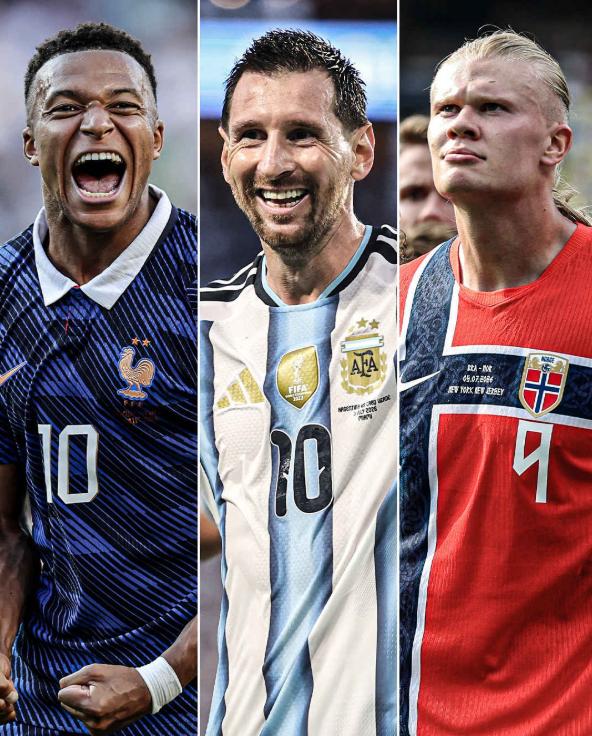
Messi is a "low-energy free organizer": reducing off-the-ball running duties, concentrating possession in the key 30-meter zone (the wide areas near the penalty area and the edge of the box), with the team compensating for his defensive duties through running. He completed his sixth World Cup with 8 goals and 4 assists, winning the Silver Ball, providing a replicable low-energy template for aging core players.
Haaland is a transition fulcrum in a two-striker system: his value lies in occupying two center-backs, creating space for second-line attackers. In his first World Cup, he scored 7 goals, including a brace in the Round of 16 against Brazil to eliminate them.
Bellingham is a "second striker making late runs under the cover of a center-forward" (an attacking midfielder who roams behind the striker and completes shots with late runs): he scored 7 goals and provided 1 assist in the tournament, scoring a brace in extra time in the quarter-final to eliminate Norway.
(b) Team-Building Order and Counterexamples
The four models correspond to four types of system interfaces. The common lesson is: the correct order of team building is to first establish the system, then design the superstar's usage, not the other way around. Messi's diminished influence in the final was also a structural inevitability—the physical depreciation of a 39-year-old body after a series of high-intensity knockout matches is not a form issue but a problem of physical supply matching on the other side of the system.
The 44th minute of Norway's quarter-final against England provided a micro-lesson: in a golden counter-attack that could have sealed a 3-0 lead, Sørloth chose not to pass to a completely unmarked Haaland on the left; England then equalized through Bellingham and completed the comeback in extra time. The significance of the interface lies here—the value of a superstar model ultimately depends on whether the system can deliver the ball to the preset attacking outlet within millisecond-level decisions. The counterexample is Brazil: relying solely on Vinícius Jr.'s individual output, with midfield losing control, they were ultimately broken down by Norway's overall system.

(a) Experience Inventory and Predefined Plans
Argentina faced elimination three times in four knockout matches and survived each time: a 3-2 extra-time win over Cape Verde in the Round of 32, a 2-0 deficit overturned to 3-2 against Egypt in the Round of 16, and a 1-0 deficit overturned with two goals after the 85th minute in the semi-final against England. This was not mysticism but experience inventory plus procedural preparation—Argentina accumulated a wealth of penalty shootout and extra-time experience during their championship cycle from 2021 to 2026, forming a predefined plan for when they concede first: the formation doesn't break, the tempo doesn't rush, substitutions are orderly. But the final proved the limits of experience inventory: when the opponent doesn't give you an entry point for a "chaotic battle," the plan cannot be triggered.
(b) Procedural Suggestions
Mental resilience is not mysticism but a designable module. Two procedural suggestions:
First, penalty shootout preparation should include the order of penalty takers, study of the opponent goalkeeper's saving habits, and psychological rehearsal for the taker (including breathing control and routine fixation), and should be included in the standard 48-hour pre-match process—Spain's semi-final was won by Oyarzabal holding his nerve to score the opening penalty.
Second, the "expected goal rate after conceding first" (i.e., the goals per unit time when trailing) can serve as a quantitative tracking indicator for the team's psychological construction. Psychology is no longer an unmanageable black box but a module that can be designed and trained like set pieces.

(a) Tactical Philosophy Shift: From "Hypnotic Possession" to "Hunting Attack and Defense"
This World Cup completed a fundamental upgrade of football tactical philosophy, completely abandoning the traditional concept of "possession equals advantage," forming a new logic of "using possession to solidify defense, using pressing to create offense."
The Tiki-Taka 2.0 system no longer relies on the individual brilliance of genius players but uses systematic pressing and counter-pressing (Gegenpressing) to directly transform the moment of losing possession into an attacking opportunity. Spain achieved a dominant performance with this system, while teams like France and Egypt verified the feasibility of multiple tactical coexistence with counter-pressing and fast transition ideas.
As FIFA's technical literature has confirmed, football is gradually abandoning unnecessary possession, and Spain is the perfect practitioner of this trend.
(b) Gegenpressing: From Tactical Option to Core Philosophy
Gegenpressing, or "counter-pressing," has evolved from a tactical choice into a core philosophy of modern football. This concept was pioneered by German coach Ralf Rangnick and popularized by Jürgen Klopp. Its core idea is: treat the moment of losing possession as the best opportunity to attack, not a defensive crisis.
Klopp famously said, "There is no better playmaker than a successful counter-press." Because in the 3-5 seconds after the opponent regains the ball, their formation is most disorganized, and the transition is incomplete. Applying pressure at this moment is most likely to cause the opponent to make a mistake and directly create a scoring opportunity.
At the 2026 World Cup, Austria, under Rangnick's leadership, became the purest counter-pressing team, requiring the ball to be won back within 3 seconds of losing it. Japan's "organized chaos" pressing showed another possibility—flexibly switching between high pressing and compact defense within the same match.
However, counter-pressing comes at a huge physical cost. Under the demanding schedule of the 2026 World Cup and the North American summer heat, "pressing smarter" became more important than "pressing harder."
(c) The Era of Risk Management: Strategy Packs Replace Single Styles
Modern football has officially entered the era of tactical risk management. Top teams no longer stick to a single tactical style but flexibly switch between tactical modules based on opponent strength, match phase, and physical condition.
Top teams focus on high pressing and systematic possession, while underdogs focus on low blocks and efficient counter-attacks. Different leagues have formed different tactical ecosystems:
1. La Liga: Relies on technical players to create local advantages in half-spaces and wide areas
2. Serie A: Emphasizes three-center-back, five-man defense, two strikers or two attacking midfielders, wide midfielder width, set pieces, and targeted arrangements
3. Bundesliga: Emphasizes high pressing, high line, vertical passing, fast attack-defense transitions, and forward counter-pressing
4. Premier League: Most tactically diverse, from high pressing to low block, various styles coexist
This diversity proves that modern football does not only reward the team with more possession but also rewards the team that knows its own strengths better and understands how to choose the way to play.
The survival wisdom of small and medium-sized teams is particularly noteworthy. Facing high pressure from strong teams, forcing short passes from the back to advance is extremely risky. Therefore, long balls from the goalkeeper, balls over the top to the wings, target man forward, and second-ball protection in the penalty area become more rational choices. Direct is not equal to rough, and long balls are not equal to backward—the key is whether they serve a clear tactical objective.
France is a typical example of tactical risk management: in tough matches, they actively shrink to avoid risk; in weaker matches, they actively press to control the tempo, with highly targeted tactical choices.
(d) Technology Empowerment Upgrade: AI and Data as Core Tactical Support
The 2026 World Cup marked the upgrade of data analysis and artificial intelligence from a post-match review tool to a real-time tactical operating system. Coaching teams can rely on player physical data, opponent heat maps, and attack-defense data to adjust formations, substitution timing, and pressing strategies in real time, with the cooling break window becoming a key node for tactical micro-adjustments. Data empowerment allows tactical decisions to break free from experience dependence, achieving scientific and precise upgrades, becoming an indispensable core competitive advantage of modern football.
(e) Future Outlook: Football as a "Cross-Scenario System Engineering"
The 2026 World Cup clearly announced the arrival of a new era: football has evolved from competing over "who has better players" to competing over "who has a more advanced system." Efficiency beats possession, depth determines the ceiling, and space is the ultimate battlefield. Successful teams rely on replicable, engineerable tactical systems, along with the ultimate quantification and utilization of space and time. In this era, tactical discipline, overall collaboration, and data-driven decision-making are no less important than individual player talent.
The future path of football development will become clearer:
1. Intelligence: AI will deeply intervene in tactical design and real-time adjustments
2. Versatility: Player positions will become blurred, and versatility will become the standard
3. Modularity: Tactical systems will become more flexible, with "strategy packs" replacing single styles
4. Scientific: Physical management and load control will become core championship skills
5. Globalization: The fusion of different football cultures will spawn new tactical innovations
When the schedule and climate push the game to its limits, the truly strong are often not the team that can run the most but the team that can find the optimal solution within the constraints. Football is evolving from a "90-minute confrontation" into a "cross-scenario system engineering."
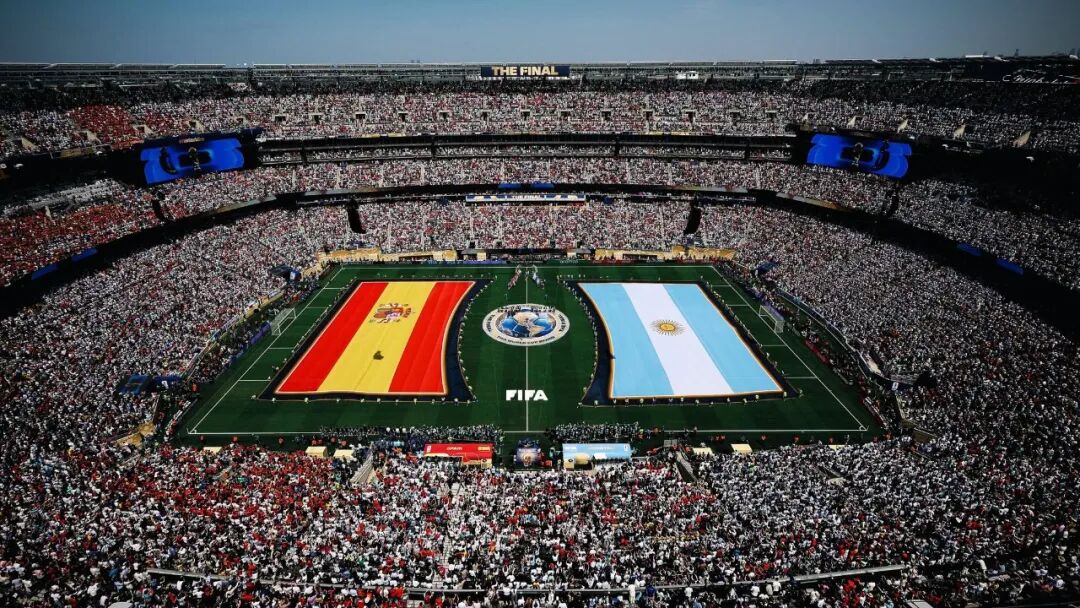


Wonderfulshortvideo

mbappe news mbappe edit mbappe new shoe boot deal mbappe nike



julian alvarez barcelona news
James Trafford’s big moment in the U21 EURO final 🤯

RODRI BARCELONA transfer barcelona news today rodri to barcelona transfer here we go

gianni infantino and trump drama news

jorge messi death messi news today football news today

jose mourinho netflix documentary pep guardiola mourinho beef mourinho edit
 Links
Links
 Contact